
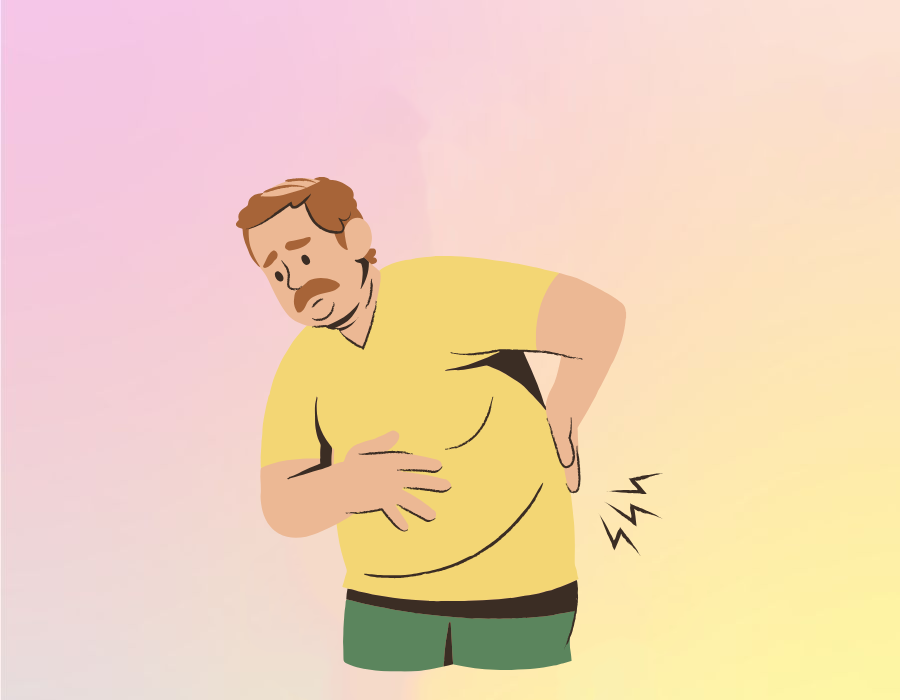
After a herniated disc, what matters more than rest
If you have any queries or suggestions, please feel free to reach out via email to info@harisonfitness.com. We will do everything in our capacity to ensure that you love your experience with us.
Lumbar disc herniation is a common ailment among middle-aged and elderly individuals, primarily affecting those in this age group and people who maintain fixed postures for extended periods. Although the number of individuals engaged in manual labor has significantly decreased in modern society, the demographic affected has notably shifted, now including younger people who lack regular physical activity.
Fortunately, most cases of lumbar disc herniation are not severe and do not require surgical intervention. However, relying solely on medication makes recovery difficult and may lead to complications, as the pressure caused by the herniated disc persists. So how should we address this? In fact, consistent, proper exercise is an excellent solution! But for whom are rehabilitation exercises for lumbar disc herniation suitable?
If you are experiencing an acute flare-up of lumbar disc herniation, rehabilitation exercises should be avoided. Assess whether your condition is in the acute phase, characterized primarily by sudden, sharp pain and numbness.
Many individuals experience limited mobility and difficulty turning over during this period. Therefore, any rehabilitation exercises should be avoided. Blindly exercising not only hinders recovery but may also prolong local inflammation. Bed rest is the optimal solution at this stage.
Patients undergoing conservative treatment during the non-acute phase are generally suitable candidates for rehabilitation exercises. Fundamentally, lumbar disc herniation refers to various symptoms caused by a protruding lumbar disc compressing nerves; if this compression does not result in narrowing of the nerve or nerve root, it may not produce any symptoms.
Clinically, it is common to encounter individuals with lumbar disc herniation visible on imaging who do not necessarily experience symptoms such as pain or numbness. In such cases, medication is unnecessary, but the protrusion itself remains present. Should an accident occur, accidental contact with the disc could trigger symptoms. For non-acute lumbar disc herniation patients, how can improvement be achieved? The fundamental approach lies in strengthening the musculature surrounding the vertebrae and alleviating nerve compression. This necessitates appropriate and effective rehabilitation exercises.
Patients who undergo surgical treatment must also engage in postoperative rehabilitation exercises. Typically, lumbar disc herniation surgery reduces pressure on the intervertebral discs to alleviate discomfort and pain. However, surgery does not signify the end of treatment or a return to worry-free living. For optimal recovery, long-term rehabilitation training remains essential. Rehabilitation exercises strengthen muscular endurance, playing a crucial role in restoring function to the surgical site and other areas.


Leave a Reply
Want to join the discussion?Feel free to contribute!