
Rotator cuff injuries may not cause significant pain, but rehabilitation care must not be taken lightly.
If you have any queries or suggestions, please feel free to reach out via email to info@harisonfitness.com. We will do everything in our capacity to ensure that you love your experience with us.
The shoulder contains numerous tendons, so when the rotator cuff is injured, patients may confuse it with other conditions such as frozen shoulder, acromioclavicular joint disorders, or long head of the biceps tendon issues. How can one make a simple distinction?
01 Distinguishing Rotator Cuff Injuries from Other Conditions
1. Frozen Shoulder
The primary symptom of frozen shoulder is also pain, accompanied by restricted movement. However, it differs slightly from rotator cuff injuries. Following a rotator cuff injury, the affected arm typically exhibits a slightly greater range of passive motion but a smaller range of active motion. In contrast, patients with frozen shoulder experience a relatively smaller range of motion for both active and passive movements in the affected arm.
2. Acromioclavicular Joint Disorders
Acromioclavicular joint disorders manifest as pronounced pain when the affected arm is raised to its highest point. In contrast, rotator cuff injuries cause significant pain only within a specific range of motion, without a clearly defined limit on that range.
3. Long Head of Biceps Tendon Pathology
Pathology in the long head of the biceps tendon presents with pronounced tenderness localized to the bicipital groove. In contrast, rotator cuff injuries typically cause pain at the humeral tuberosity, offering a clear distinction.
However, when experiencing pain without a confirmed diagnosis, it is best not to speculate. Instead, seek medical evaluation through a physical examination or MRI imaging for an accurate diagnosis.
02 How to Recover After Repeat Surgery for Rotator Cuff Injuries
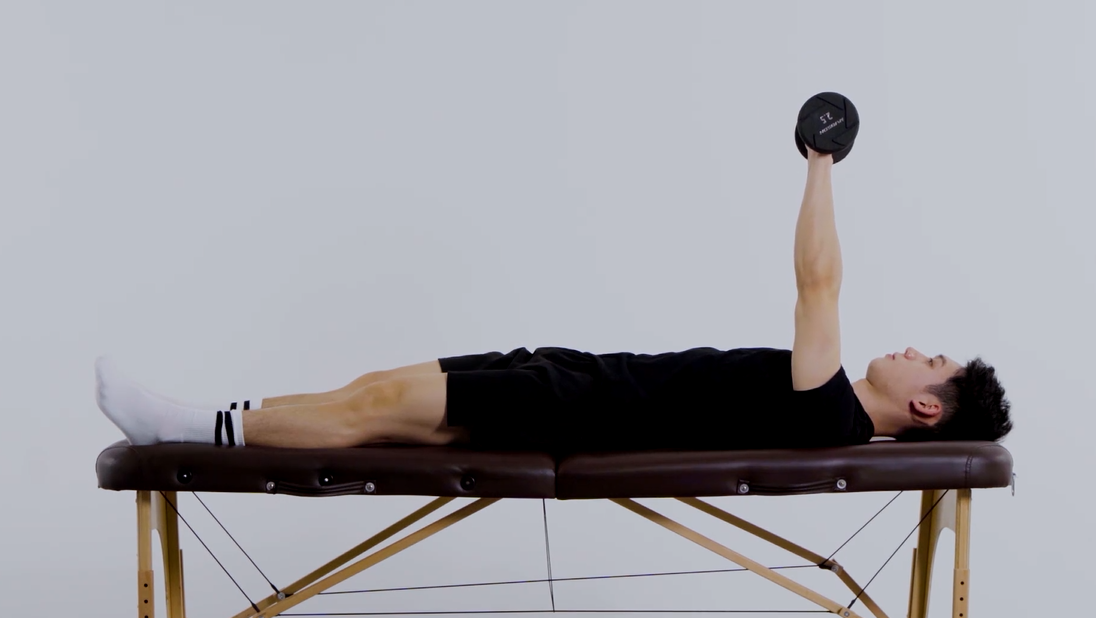
Action 1: Supine Kettlebell Hold
Lie flat on your back with your lower back pressed against the floor and knees bent. Using the arm on the affected side, hold the kettlebell upside down with one hand while maintaining stability. Keep your shoulder pressed to the floor. Avoid using weights that are too heavy, as this can strain the rotator cuff. Hold for approximately 16 seconds.
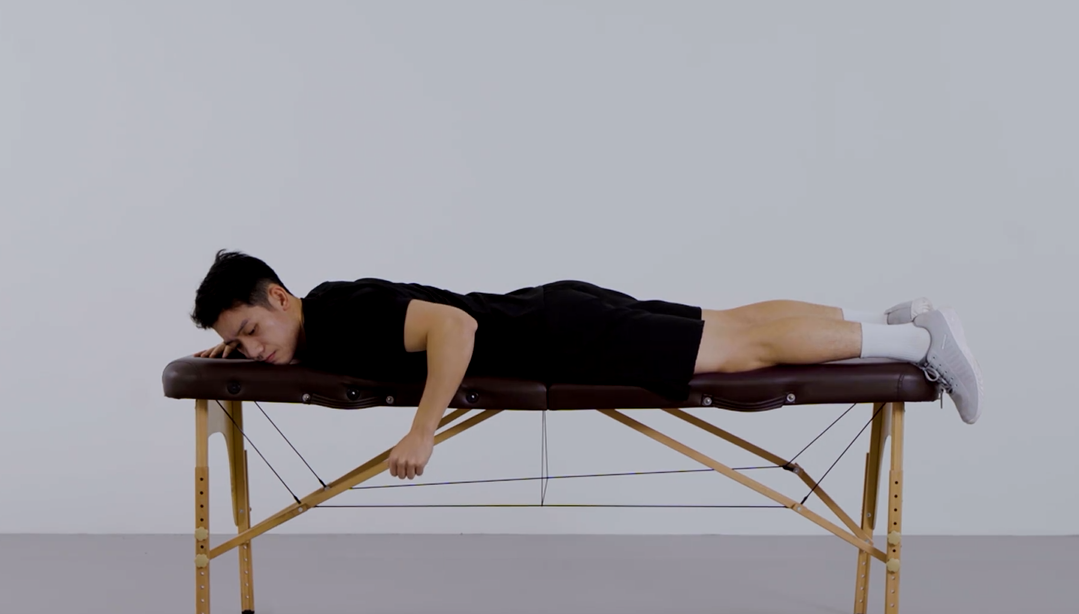
Exercise 2: Prone Dumbbell Row
Lie prone with the affected arm extended off the bed, hanging naturally while holding a dumbbell. Exhale as you extend your arm backward, pulling the dumbbell upward. Inhale as you return to the starting position. Hold for approximately 16 seconds.
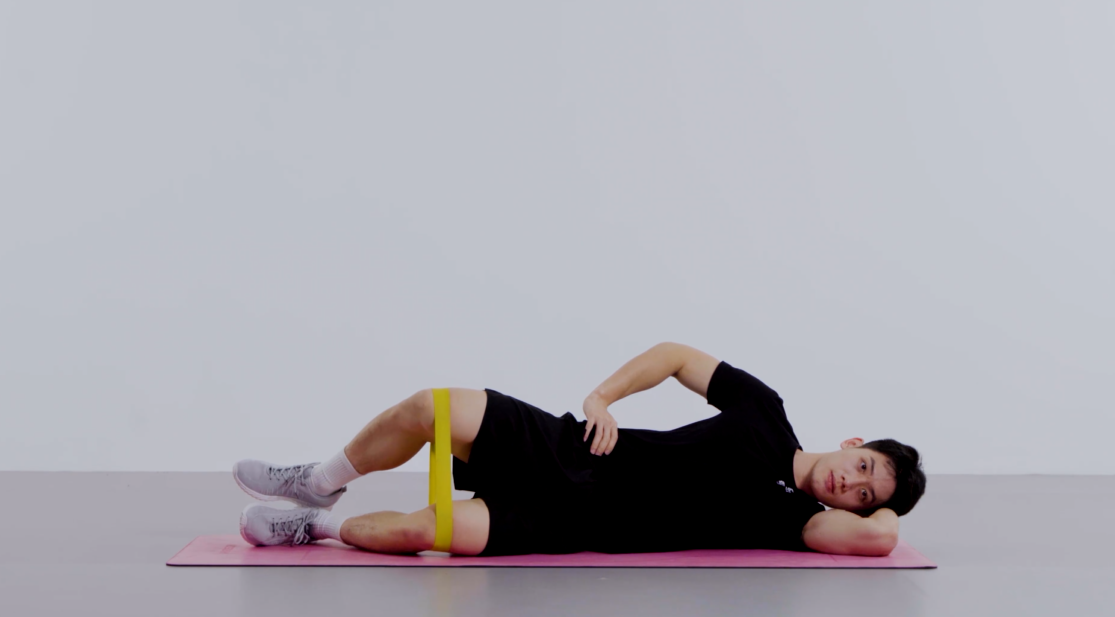
Exercise 3: Resistance Band Clamshell
Lie on your side with hips and knees bent. Position the resistance band just above your knees. Exhale as you open your legs outward. Inhale as you lower the raised leg, maintaining stability throughout. Place hands on your waist for support. Repeat for approximately 24 seconds.
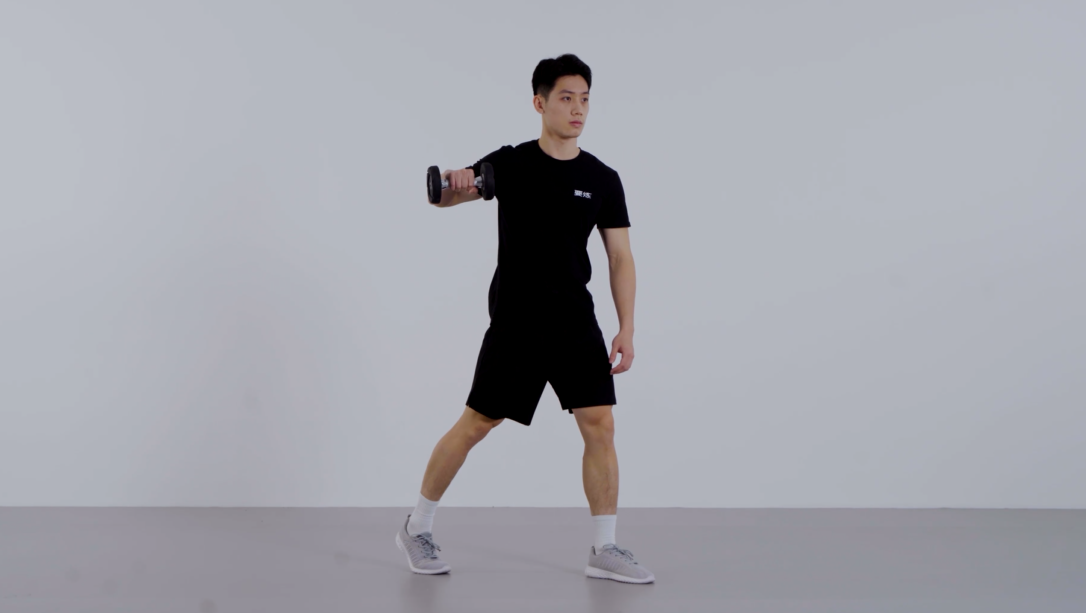
Exercise 4: Lawnmower
Stand with the affected arm holding a dumbbell. Lean forward, then pull the dumbbell upward while slowly rotating your torso backward. Avoid rushing the movement. Repeat. Duration: Approximately 30 seconds.
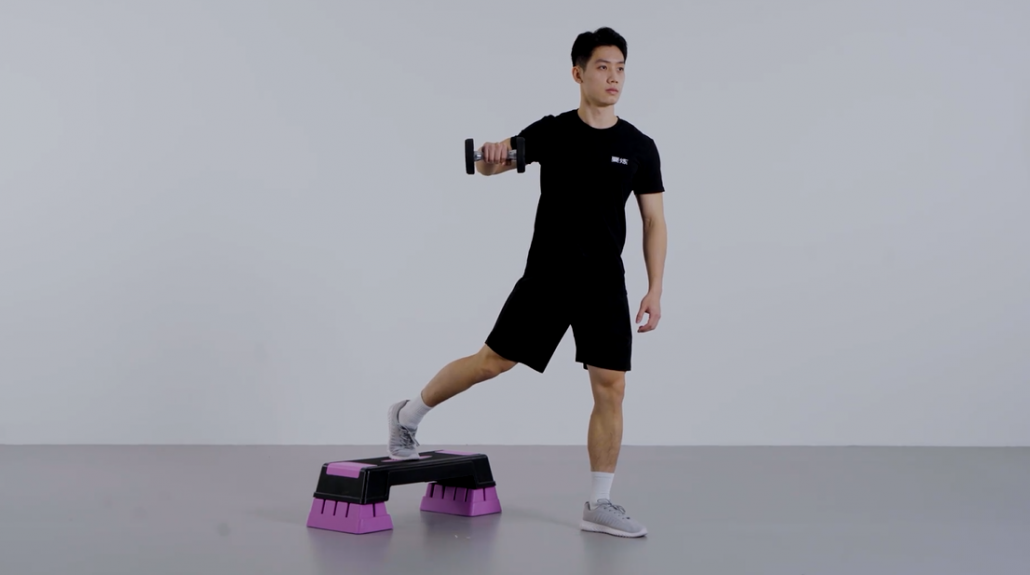
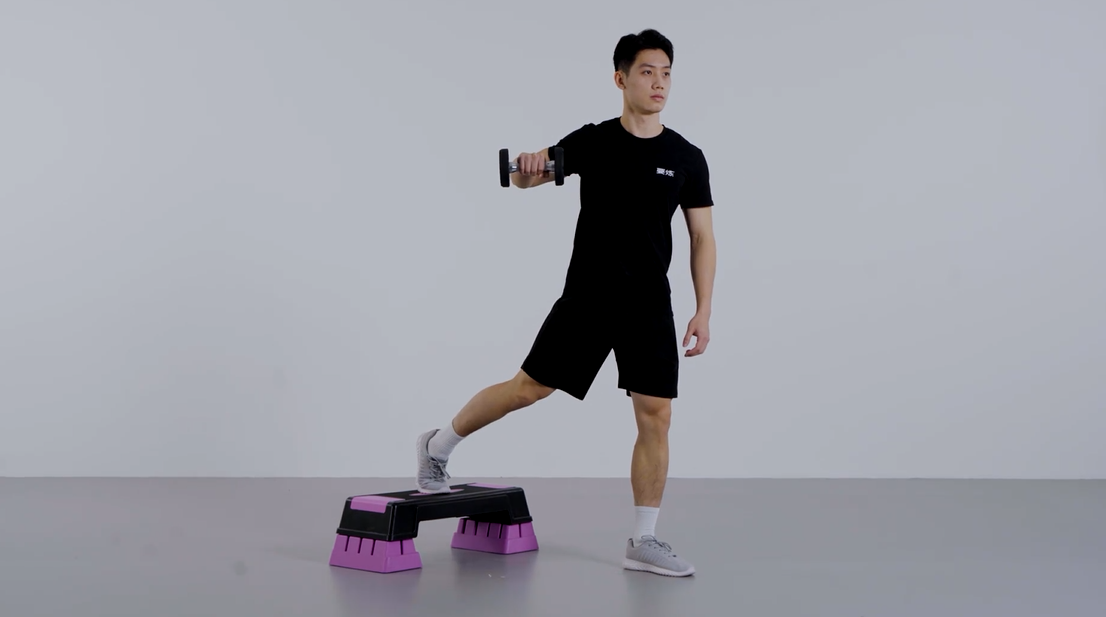
Exercise 5: Advanced Lawnmower
Place the foot on the same side as the affected arm on a step platform. Stand upright with the affected arm holding a dumbbell, then lean forward. Pull the dumbbell upward while rotating your torso backward. Repeat the exercise. Perform for approximately 20 seconds.
All five exercises above help repair rotator cuff injuries. They enhance upper limb joint stability while aiding functional recovery and improving overall strength. Generally, practicing 2 to 3 times daily is sufficient to achieve the desired results.


Leave a Reply
Want to join the discussion?Feel free to contribute!