
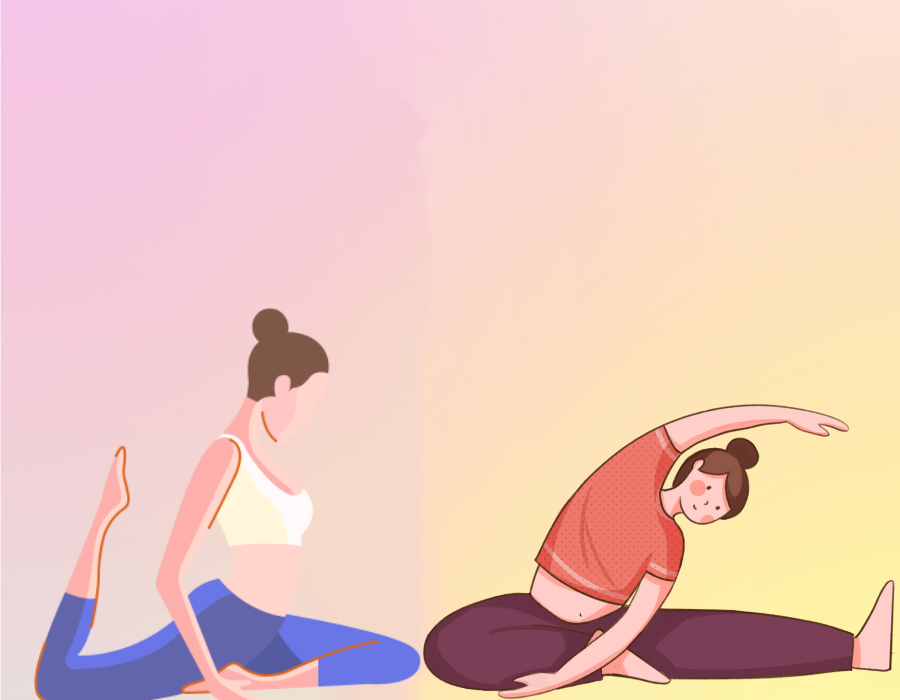
This set of yoga poses even got mom’s seal of approval.
If you have any queries or suggestions, please feel free to reach out via email to info@harisonfitness.com. We will do everything in our capacity to ensure that you love your experience with us.
How to practice yoga during pregnancy and how yoga can help alleviate physical and mental issues related to pregnancy and childbirth are topics of great interest to many. So this time, let’s talk about prenatal yoga.
01 What Are the Benefits of Practicing Yoga During Pregnancy?
Generally speaking, it is safe to practice yoga during pregnancy. Expectant mothers who maintained a yoga practice before pregnancy can continue their routine throughout pregnancy, switching to simpler poses and breathing techniques in the final week before delivery.
The benefits of prenatal yoga include the following five points:
1. Helps strengthen the mother’s physical condition while promoting fetal development
2. Improves blood circulation and reduces pregnancy-related edema
3. Enhances cardiovascular function and reduces fatigue during pregnancy
4. Aids in relaxation and emotional stability
5. Supports natural childbirth and facilitates postpartum physical recovery and body restoration
02 What Precautions Should Be Taken When Practicing Yoga During Pregnancy
If an expectant mother has practiced yoga for some time before pregnancy, she may engage in simpler exercises during the first trimester. However, for those who have never practiced yoga, are not accustomed to regular exercise, or have a history of miscarriage, yoga should only be initiated during the second trimester (after 12 to 14 weeks).
Key considerations for prenatal yoga include:
1. Practice is recommended during months 4–7; yoga is not advised during the first trimester.
2. Choose lightweight, loose-fitting, comfortable yoga attire.
3. Avoid deep twists, forward bends, and backbends.
4. Select a yoga studio with adequate ventilation.
03 A Simple Set of Prenatal Yoga Poses
This prenatal yoga routine features simple yet effective poses—highly recommended for expectant mothers!
1. Standing Squat Pose
Stand with feet about one and a half shoulder-widths apart, toes pointing diagonally forward at a 45° angle. Extend arms horizontally with fingertips facing upward, pressing the heel of each palm firmly outward in opposite directions. As you exhale, bend your knees to lower into a squat, keeping knees aligned with the direction of your legs. If this feels challenging, place your hands together in front of your chest or rest them on your abdomen.
2. Wall Push-Ups
Stand facing a wall at arm’s length, feet shoulder-width apart, with palms pressed against the wall. Exhale as you bend your arms, keeping them close to your body. Maintain a straight line from head to toe throughout the movement.
3. Seated Breathing Exercise
Sit cross-legged with feet together, hands resting on ankles. Gently clasp ankles with hands, lower head, close eyes, and draw shoulders back. As you stretch the back muscles, lift your head and inhale. Exhale, return to the starting position. You may also sit with legs crossed.
4. Cat Stretch Breathing Exercise
Kneel upright with knees spread two fist-widths apart. Keep thighs and arms perpendicular to the ground, pressing palms and backs of legs firmly down. Relax your back naturally, eyes gazing downward. Inhale, slowly lift your head and chest forward, face forward, lifting the tailbone upward as if the back of your head is pressing toward your spine. Exhale, hold this position for 3-5 breaths, then return to the basic posture.
Inhale while slowly arching your spine upward and lowering your tailbone, rounding your back like a cat. Tuck your chin toward your navel (the position of the fetus in the womb). Exhale, hold this position for 3-5 breaths, then return to the starting pose.
5. Supine Twist
Lie flat on your back on the mat with knees bent, feet hip-width apart, and soles flat on the floor. Inhale, extend arms straight out to the sides at shoulder width, palms facing down. Exhale, tilt both legs to the right while turning your head to the left, keeping shoulders grounded and gently twisting the torso.
Finally, while yoga is beneficial, always practice under the guidance of a certified instructor!


Leave a Reply
Want to join the discussion?Feel free to contribute!