
Why Can’t You Keep Running? Here’s How to Make It Feel Easier
If you have any queries or suggestions, please feel free to reach out via email to info@harisonfitness.com. We will do everything in our capacity to ensure that you love your experience with us.
Running, as one of the most common and accessible forms of exercise, is something many people struggle to keep up for more than a few minutes. If you want to run farther and longer, running rhythm is the key! So, how do you master the right rhythm?
01 Coordinate Arm Swing with Leg Movement
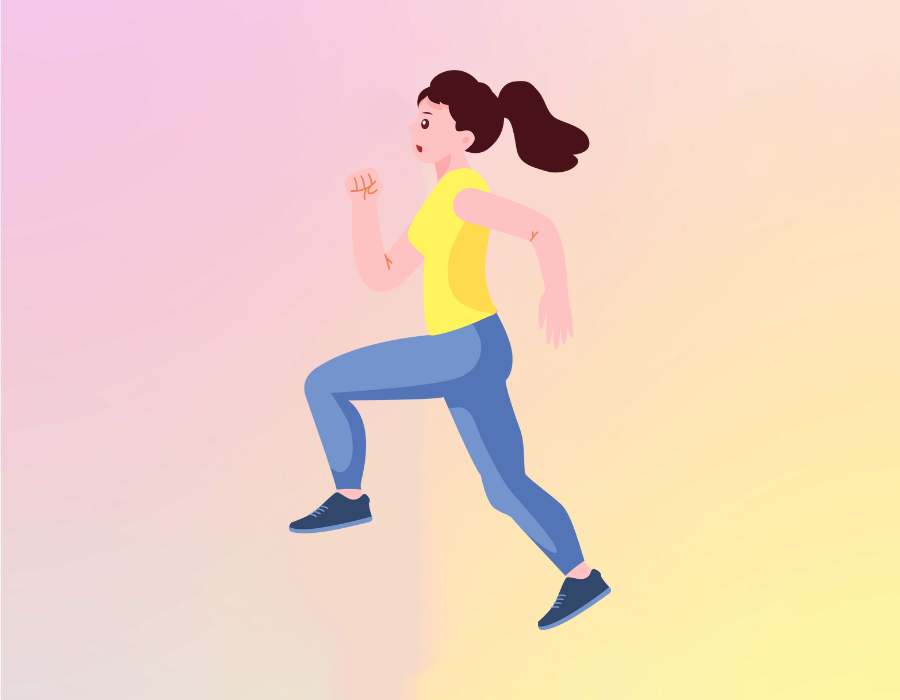
Arm swing has a major influence on developing a sense of running rhythm. Just like in everyday walking, if you swing your arms so that the left arm moves forward as the right leg steps forward (and vice versa), your steps become more regular and stable. A very small number of people swing their arms “in step” with the same-side leg — this is incorrect. Others don’t swing their arms at all, keeping them straight and pressed tightly to the sides, which does nothing to improve running efficiency.
The correct arm action:
-
Left arm corresponds to right leg, right arm to left leg.
-
Keep elbows bent at about 90° and let the arms hang naturally at the sides of the torso.
-
Swing arms back and forth as you run.
-
Adjust swing amplitude according to leg stride: larger strides mean larger arm swings; faster leg turnover means faster arm swings.When upper and lower limbs work together in sync, the rhythm naturally emerges.
02 Match Breathing to Leg Cadence
Breathing differs between jogging and sprinting because energy consumption — and thus oxygen demand — is higher when running fast. During jogging, energy use is lower and oxygen needs are smaller. Therefore, breathing should match the demands of your pace:
-
Sprinting → high‑frequency breathing (e.g., one breath in and one out per step, or two steps inhale, one step exhale).
-
Jogging → low‑frequency breathing (e.g., three steps inhale, one step exhale if speed is slow).Rapid inhalation can cause air to rush into the nasal cavity, throat, and trachea, sometimes leaving the mouth and throat dry; exhalation has no such drawback, so you can fully expel waste air from the lungs within one step. Let leg cadence drive breathing rate, and let breathing rhythm guide leg rhythm.
03 Use the Thighs to Drive Stride Frequency
Some runners push their legs forward mainly with the lower leg, barely using the thighs. This leads to several problems: small stride length, quick fatigue, and no sense of rhythm.
The correct method:
-
Power comes from the thighs — lift them high to drive the lower legs forward.
-
This lets the thighs control stride rhythm, increases stride length, and lets you run faster and more easily.During running, the key point of force application is the thigh; once the thigh is lifted properly, speed can be maintained effortlessly.
So, when running, don’t just envy others’ long legs. With a good sense of rhythm tailored to yourself, you can also complete runs comfortably and smoothly.


Leave a Reply
Want to join the discussion?Feel free to contribute!