
Postpartum belly sagging, lower back pain, and urinary leakage? Don’t panic!
If you have any queries or suggestions, please feel free to reach out via email to info@harisonfitness.com. We will do everything in our capacity to ensure that you love your experience with us.
When moms hold their soft, squishy babies with hearts full of joy, their bodies quietly flash a “red light”: that pre-pregnancy slim waistline vanishes, replaced by a flabby belly like a “swim ring”; After just a few minutes of holding the baby, their back aches so badly they can barely stand up straight. Even more embarrassing, coughing or laughing hard can lead to involuntary urine leakage… For the vast majority of postpartum moms, the culprit behind these troubles is this—diastasis recti!
01 What is Diastasis Recti?
As the baby grows during pregnancy, the uterus continuously expands, forcibly stretching the rectus abdominis muscles apart. This causes the two sides of the rectus abdominis to separate from the midline of the abdomen. This isn’t an isolated occurrence—it’s the most common “aftereffect” for new moms. The trouble it brings goes far beyond just affecting appearance!
Lower Back Pain and Discomfort Arise The rectus abdominis muscles serve as the primary support for the abdomen and spine. Once separated, muscle strength diminishes, reducing spinal stability. Daily activities like carrying a baby, doing housework, or even simply standing can easily lead to lower back pain and discomfort, significantly impacting childcare routines.
Visceral Health Under Threat Severe separation can compromise abdominal support for internal organs, potentially causing displacement or prolapse. This may trigger vomiting, indigestion, and other issues, adding further strain to an already exhausted postpartum body.
02 How to Improve Diastasis Recti
To address this issue, it’s crucial to understand: Recovery from diastasis recti requires tailored approaches based on specific conditions!
Separation distance < 2cm: Dietary adjustments + scientifically guided exercise can gradually help realign the rectus abdominis muscles.
Separation distance > 2cm: Seek prompt medical attention and strictly follow your doctor’s professional guidance—never ignore it!
Important Reminder: If you experience unstable vital signs postpartum, complications, cesarean wound infection, significant pain, exercise-induced pain, abdominal hernia/umbilical hernia, or deep vein thrombosis in the lower limbs, training must be conducted under professional supervision!
03 Dietary Adjustments: Eating Nutritiously
Muscle repair requires ample and high-quality nutrition. Postpartum mothers can follow these dietary guidelines:
Ensure dietary diversity: Balance meat and vegetables for nutritional equilibrium. This supports recovery while preventing excessive fat accumulation. Prioritize high-quality protein + Vitamin A: Consume lean meats, eggs, milk, and seafood—protein forms the foundation of muscle repair. Don’t neglect iodine: This essential trace element boosts protein synthesis. Incorporate seaweed and laver into your routine.
04 Scientific Exercise, Starting from the Postpartum Period
The postpartum period is the golden window for rectus abdominis recovery. Training during this phase lays the foundation for subsequent recovery, much like building a house’s foundation. Spend 25–30 minutes daily following these 4 exercises!
1. Rectus Abdominis Fascia Release
Action: Lie flat on a yoga mat with knees bent. Relax your abdomen and place both hands around the center of your belly, performing gentle massage to release tension. Note: Breathe naturally. Use gentle pressure—avoid excessive force.
2. Oblique Fascia Release
Action: Lie flat on a yoga mat with knees bent and abdomen relaxed. Place hands on either side of your abdomen and gently massage to relax the oblique muscles. Note: Maintain natural breathing. Adjust pressure to your comfort level.
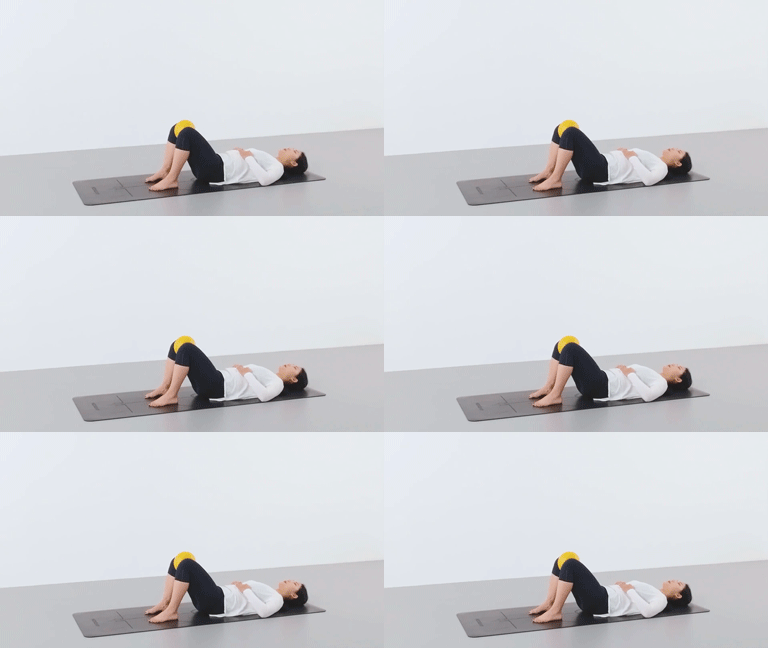
3. Supine Ball Squeeze Abdominal Breathing
Action: Lie flat and relaxed with knees bent, squeezing a yoga ball between them. Place one hand on your chest and one on your abdomen. Inhale through your nose while keeping your chest still; your abdomen should slowly expand like an inflatable ball, lifting the hand on your belly. Exhale through your mouth while actively drawing your abdomen toward your navel and the floor, gently squeezing the ball between your knees until all air is expelled. One inhale-exhale cycle counts as one repetition. Note: Inhale to expand the abdomen, exhale to contract it. Avoid using chest muscles and prevent excessive engagement of the lower back and ribs.
4. Supine Ball-Holding 3D Abdominal Breathing
Action: Lie flat and fully relaxed with knees bent, holding a yoga ball between them. Place both hands on the sides of your ribs. Inhale through your nose, keeping your chest still while your abdomen slowly expands. Exhale through your mouth, pressing your hands against your ribs to draw them toward your navel. Contract your abdomen downward, tighten your pelvic floor muscles, and gently squeeze the ball until all air is expelled. Note: Maintain a stable chest throughout, avoiding raised ribs or excessive lower back strain.
Becoming a mother is a profound journey of self-cultivation. But remember: while loving your baby, love yourself deeply too.


Leave a Reply
Want to join the discussion?Feel free to contribute!