
Home Treadmill Buying Guide: How to Choose the Right One for Your Gym
A home treadmill can make cardio more convenient, consistent, and private. You can walk or run before work, between meetings, or during poor weather without driving to a gym or dealing with outdoor traffic and uneven surfaces. For apartment residents, garage gyms, basements, and spare rooms, a treadmill can provide dependable year-round access to walking, running, intervals, and steady-state training.
Choosing the right machine requires more than selecting the console with the most features. The treadmill must fit your room, stride, workout goals, noise expectations, storage plan, and budget. Running surface, motor durability, cushioning, incline, stability, delivery, assembly, warranty, and maintenance all affect how useful the machine will be over time.
This guide compares the main types of home treadmills, explains the features that matter in real household use, and covers sizing, installation, safe operation, and basic care. The goal is to help you buy a treadmill you can use comfortably and consistently.
Why a Home Treadmill May Be the Right Cardio Equipment
A treadmill gives you control over pace, incline, workout duration, and training environment. Unlike outdoor exercise, it removes concerns about rain, snow, traffic, poor lighting, and irregular terrain. It is also useful for structured intervals because you can maintain a repeatable speed and change the grade or pace precisely.
Compared with bikes, ellipticals, and rowers, a treadmill reproduces the familiar mechanics of walking and running. That makes it a straightforward choice if your goals center on daily steps, distance, race preparation, or regular walking sessions.
A treadmill is not ideal for every home. Motor and footfall noise may be a concern in an apartment or second-floor room, especially over thin flooring. If you need to reclaim floor space after every workout, a folding or compact model may be more practical. The best choice is the machine that fits your daily routine well enough that you will actually use it.
Common Types of Home Treadmills
Full-Size Motorized Treadmills
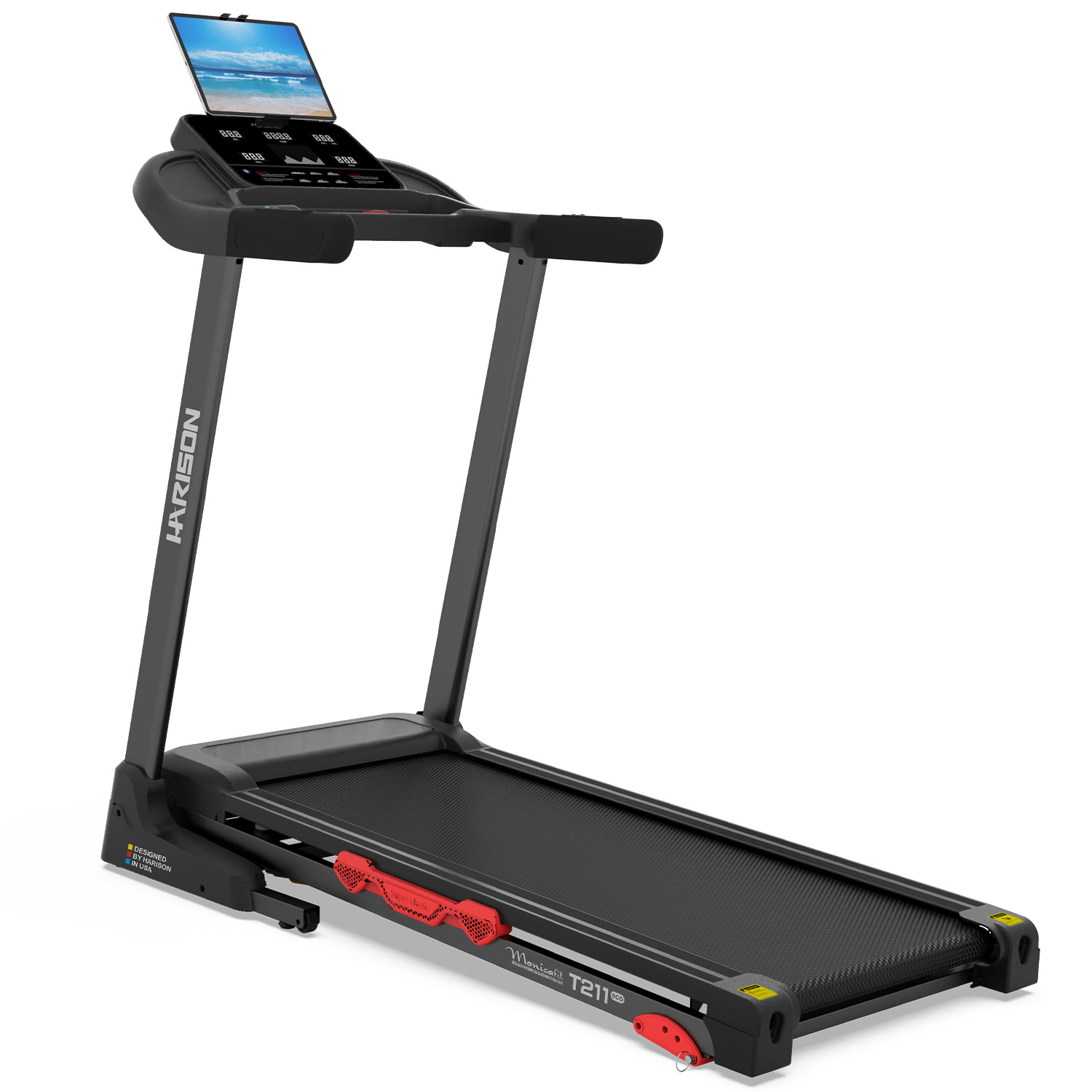
These are the standard choice for regular runners. They typically include a larger belt, a powered motor, multiple speed settings, and a selection of incline options. The longer deck offers more room for natural running form and is particularly helpful for taller users, faster training, and longer sessions.
Choose a full-size motorized treadmill when you want a stable everyday machine, a broad speed range, or enough deck length for intervals and sprint work.
Folding Treadmills
Folding models allow the deck to move into a vertical position when the machine is not being used. This can be valuable in a spare bedroom, narrow garage, or apartment where the floor must serve more than one purpose.
Check both the operating dimensions and the folded dimensions. A folding design saves floor space, but the upright position still needs safe clearance and enough room for storage.
Compact and Under-Desk Treadmills
Smaller walking treadmills are designed for tight spaces, extended low-speed walking, and use under a desk. They are convenient for light cardio and daily movement but generally are not appropriate for running, high speeds, or steep inclines.
Manual and Non-Motorized Treadmills
Manual treadmills use the user’s movement to drive the belt. They have fewer electronic components, which can reduce maintenance needs, and some models are compact. However, they often require more effort to operate and may provide fewer programs and speed controls than powered treadmills.
Incline Trainers and Curved Treadmills
Incline trainers and curved treadmills are designed for more intense sessions. They may offer steep grades or a non-motorized running curve that increases the effort required. These machines can be effective for high-intensity conditioning, but they usually require more space, budget, and maintenance.
Choose a treadmill type according to your primary use: walking or running, everyday convenience or occasional training, and steady cardio or HIIT.
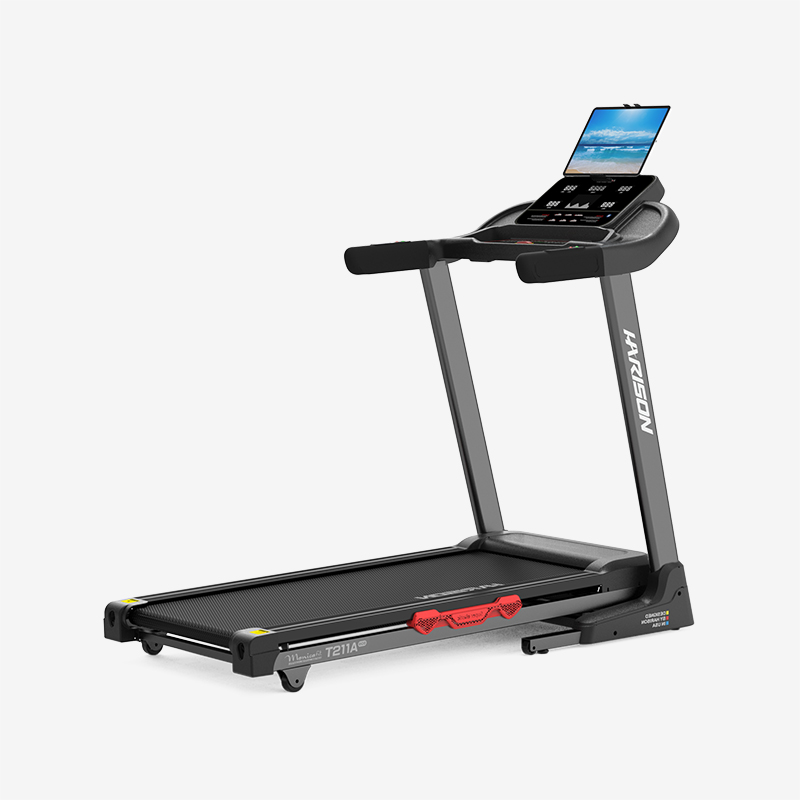
MONICAFIT T211A Eco Intelligent Electric Treadmill Treadmill
Features to Compare Before Buying
Running surface: The belt should provide enough length and width for your stride. Shorter decks may work for walking and shorter-stride users, while taller runners and people who sprint usually need more room to avoid feeling restricted.
Cushioning and deck construction: Treadmill cushioning can reduce impact and vibration. It may be especially useful if you have joint concerns or share a home with people who are sensitive to noise. Compare how the deck feels and whether the cushioning is designed for the type of training you plan to do.
Speed and incline range: Select a machine that supports your intended intensity. A modest incline can add variety to walking, while a wider range is more useful for hill intervals and advanced training.
Frame stability: A solid frame reduces wobbling at higher speeds and during vigorous intervals. Stability is a safety feature, not merely a matter of comfort.
Console and connectivity: Preset workouts, Bluetooth, heart-rate tracking, app compatibility, and touchscreen displays can be useful. Prioritize controls that are easy to operate and features you will actually use instead of paying for unnecessary extras.
Motor and weight capacity: Confirm that the user-weight rating suits everyone who will use the treadmill. A durable motor and stronger components are especially important when multiple people train on the machine or when it will be used frequently.
Folding and transport: Check how the machine folds, where the transport wheels are located, and whether the folded frame can be moved safely. Also review the clearance required to unfold it.
Noise: Motor hum and footfall noise vary by model. Apartment users and upstairs exercisers should look for quieter construction, use a dense protective mat, and consider placement away from bedrooms or shared walls.
Warranty, delivery, and returns: Review coverage for the motor, frame, parts, and labor. Confirm whether delivery is curbside or in-home, whether assembly costs extra, and how long the return window lasts.
Measuring and Setting Up a Treadmill at Home
Measure the room before you buy. A treadmill needs more than its listed footprint: leave clearance at the sides and behind the deck for access and safe dismounting. Use both the operating and folded measurements when evaluating a folding model.
Ceiling height is important, especially when the deck rises. Your standing height, the incline, and the height of an upright console can reduce available headroom. Taller users and people training at an incline should double-check clearance in garages and basements.
Place the treadmill on a level, stable floor. A non-slip mat can protect hardwood, concrete, and painted flooring while reducing vibration. If the basement floor is uneven, adjustable leveling feet can help stabilize the frame.
Position the treadmill near a grounded outlet and avoid extension cords unless the manufacturer specifically approves them. Leave enough room for ventilation and consider using a fan in a closed basement or small room.
Measure every doorway, hallway, stairway, and turn between delivery access and the intended room. Large machines may arrive in heavy boxes and require two or more people to move. In-home delivery and professional assembly may be worthwhile for a basement, upstairs room, or difficult entry route.
Safe Use and Routine Maintenance
Begin each session with a short warmup at an easy pace. Attach the safety key or emergency-stop clip when available. Keep children and pets away from the belt, and never step onto a moving belt without maintaining control. Wear supportive athletic shoes rather than running barefoot or in socks, stay hydrated, and maintain a posture that allows you to see the belt and console clearly.
Keep the belt and console free of sweat, dust, and debris. Wipe the machine after workouts, since accumulated dirt can increase wear on the belt and motor. Periodically check that the belt remains centered and properly tensioned. Misalignment can create noise and accelerate damage.
Some treadmills need lubrication beneath the belt, while others do not. Follow the owner’s manual for the correct product and schedule. Inspect bolts, rails, uprights, and the console regularly; a quick monthly check can identify loose hardware early.
Dust can collect inside the motor compartment, particularly in garages and basements. Clean it only as directed by the manufacturer so you do not damage components or affect the warranty. If the treadmill develops unusual noises, inconsistent speed, slipping, or other mechanical problems, stop using it and contact the retailer or a qualified service technician.
Finalizing Your Home Treadmill Purchase
The best home treadmill matches your room, stride, workout goals, and practical needs. Measure the space and ceiling, evaluate noise and delivery logistics, and prioritize a running surface, frame stability, motor, and cushioning suited to your training.
Choose a folding or compact model when storage is the main concern. Select a full-size motorized treadmill when you plan to run regularly, train for races, or need a longer belt for speed work. Before ordering, identify your three most important features, confirm delivery and assembly terms, and read the warranty and return policy carefully.


Leave a Reply
Want to join the discussion?Feel free to contribute!