Dumbbell Sets for Home Gyms: How to Choose the Right Setup
A well-chosen dumbbell set can serve as the foundation of a practical home gym. Dumbbells take up less space than many machines, support a wide range of movements, and work for both strength sessions and fast-paced conditioning circuits. Whether your workout area is in a garage, basement, spare bedroom, or apartment, the right set can help you train progressively without filling the room with unnecessary equipment.
Before purchasing, think beyond the number printed on the weight. Fixed, adjustable, and selectorized dumbbell sets offer different experiences in terms of storage, durability, speed of weight changes, grip, delivery, and maintenance. You also need to consider the size of your workout area, floor protection, noise, and the amount of weight you expect to use in the future.
This guide explains the main types of dumbbell sets, the most important shopping criteria, home delivery and setup considerations, safe use, basic care, and how to match a set to your training goals and budget.
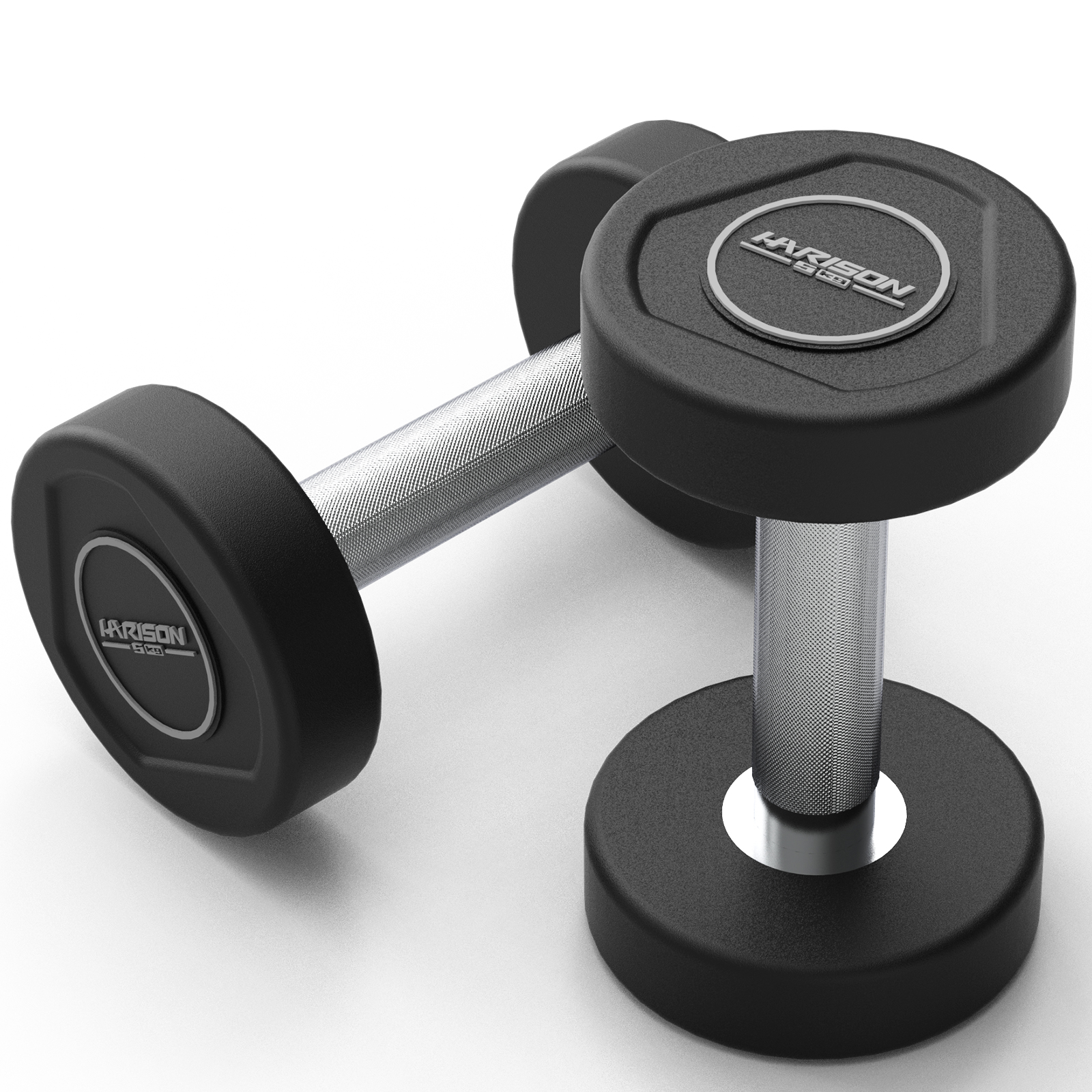
HARISON TPU Dumbbells – Non-Slip Textured Grip, Floor-Friendly, Eco-Friendly Material (2.5–25 kg)
Why Use a Dumbbell Set at Home?
Dumbbells can handle presses, rows, curls, lunges, squats, carries, unilateral exercises, and many other strength movements. Because each side of the body works independently, dumbbell training can challenge balance and coordination while helping you identify strength differences between sides.
A single set can support heavier, slower strength work as well as high-repetition circuits. If you have limited space, an adjustable or stackable set can provide several resistance levels without requiring a full rack. Rubber-coated heads and a suitable storage stand are also useful in an apartment because they can reduce floor impact and keep equipment organized.
Dumbbells are not a complete replacement for every piece of strength equipment. People focused on very heavy barbell squats, deadlifts, or bench presses may still need a barbell, plates, and rack. For general home strength, accessory training, conditioning, and unilateral work, however, dumbbells offer a highly adaptable solution.
Fixed, Adjustable, and Selectorized Dumbbell Sets
Fixed Dumbbells
Fixed dumbbells have a permanent weight and are ready to use immediately. With no adjustment hardware, they usually feel solid during heavy lifts and can withstand repeated use when stored properly. Common designs include rubber-coated hex heads and traditional round cast-iron heads.
A fixed set works best when you have enough space for a rack and already know which weights you use most often. The main disadvantages are the cost and floor area required as you add more pairs. A complete collection can also be difficult to move through narrow doorways or up stairs.
Plate-Loaded Adjustable Dumbbells
Plate-loaded adjustable dumbbells use one handle with removable plates secured by collars. They allow several weights in one compact package and are often less expensive than selectorized models. The weight can be customized by adding or removing plates.
The drawback is that changing resistance takes longer, especially between exercises. You must handle loose plates and check that every collar is tight. The handle may also feel different from a fixed dumbbell, which can affect comfort during higher-repetition work.
Selectorized Dumbbells
Selectorized models use a dial, pin, or locking mechanism to choose the desired load. They are convenient for supersets and circuit workouts because weight changes are fast and unused plates stay in a base or cradle.
These systems are usually more compact than a fixed rack, but they include more moving parts. Check that the selector clicks into place securely and that the cradle aligns correctly. Selectorized sets can also be more expensive or heavier than basic plate-loaded designs.
| Type | Main Strength | Main Trade-Off |
| Fixed dumbbells | Durable, stable, and ready to use | Need more space and cost more as the set grows |
| Plate-loaded adjustable | Compact and often budget-friendly | Weight changes are slower and require collars |
| Selectorized | Fast adjustments and efficient storage | More moving parts and usually a higher price |
What to Check Before Buying
Weight range and increments: Make sure the set includes your current training weights and leaves room for future progression. Smaller increases, such as 2.5- to 5-pound steps, make it easier to build strength gradually. A set with a low maximum weight may become limiting quickly.
Handle diameter and grip: Handles should feel secure without causing unnecessary hand fatigue. Aggressive knurling can improve traction but may irritate the palms, while very thick handles may be difficult for people with smaller hands. If possible, test the grip before buying.
Materials and floor protection: Rubber or urethane heads are quieter and can help protect concrete, wood, or finished flooring. Cast iron is durable but can be louder and may damage a floor if dropped. A rubber mat is recommended regardless of head material.
Storage: Check whether the set includes a rack, tray, or cradle. Organized storage keeps the workout area clear, makes weight selection easier, and reduces the chance of tripping over loose equipment.
Build quality and warranty: Look for secure welds, tight collars, reliable selector parts, and a manufacturer warranty. The return policy should explain who pays shipping and whether restocking fees apply to heavy items.
Assembly and weight accuracy: Confirm whether the set arrives ready to use. Plate-loaded models may require collars and plates to be installed, while selectorized products may need basic initial setup. Adjustable components should lock firmly and correspond accurately to the selected weight.
Noise: Apartment users should prioritize rubber-coated heads, controlled placement, and a quality floor mat. Avoid dropping dumbbells, even when the product is marketed as durable.
Space, Delivery, and Installation Planning
Consider the route from the delivery vehicle to the final workout area. Stairs, narrow doors, low ceilings, and tight corners can make a fixed dumbbell rack difficult to move. Adjustable sets often arrive in smaller boxes, although heavier maximum-weight models may still require two people.
Ask the retailer whether delivery is curbside, threshold, room-of-choice, or white-glove service. Confirm whether assembly is included and whether the stand or rack arrives separately. Keep the instruction manual, tools, and small components in a labeled location.
Measure the area where you will train and leave enough room to move safely. Overhead clearance matters for presses, snatches, and other exercises performed above the head. A standard garage or basement should generally provide at least eight feet of height, with additional clearance if you stand on a bench.
Use a rubber mat approximately 3/8 to 1/2 inch thick to protect the floor and reduce impact noise. In an apartment, combine the mat with rubber-coated dumbbells and schedule workouts at reasonable times to limit disturbances for downstairs neighbors.
Review the return timeline before ordering. Some retailers set short deadlines or charge restocking and return-shipping fees for heavy equipment. Make sure you can test the grip, weight selection, and storage system within the allowed period.
Safe Use and Basic Maintenance
Warm up before heavy lifting and use controlled movements, especially during overhead and single-arm exercises. Keep a clear four- to six-foot workout zone so you do not hit walls, furniture, or other equipment. Use a stable bench for presses and supported rows rather than improvised furniture.
Plan how you will finish a heavy set. Lower the dumbbell onto a bench, step, or mat instead of dropping it onto a hard floor. Children should not have access to unsecured weights, so store dumbbells on a rack or in another location that is out of reach.
Wipe handles and heads after workouts to remove sweat. Clean rubber and urethane surfaces with mild soap and water, and avoid harsh solvents. Check collars, screws, fasteners, and selector mechanisms periodically. If a cast-iron dumbbell develops a small rust spot, clean it and apply a light protective coat of oil as appropriate.
Do not use a dumbbell with a loose head, damaged handle, bent part, or compromised locking mechanism. Replace the part or contact the manufacturer before returning the equipment to service. Regular inspection is especially important for adjustable designs because their moving components experience more wear than fixed dumbbells.
How to Choose Your Best Dumbbell Setup
If you have sufficient room and expect to lift heavy for many years, a combination of fixed dumbbells for frequently used heavy pairs and an adjustable set for accessory work can be effective. Fixed weights provide a solid feel and immediate access, while adjustables reduce the number of pairs you need to store.
If your budget or floor space is limited, a high-quality adjustable set may provide the best value. Apartment residents should prioritize rubber-coated heads, a protective mat, compact storage, and delivery options that reduce the difficulty of moving heavy equipment.
Before purchasing, compare maximum weight, increment sizes, handle design, materials, rack or cradle dimensions, warranty coverage, and return terms. If possible, visit a local store to check grip and knurling in person. Choose equipment that fits your room, training program, and everyday habits rather than selecting the largest set available.
Final Buying Advice
A dumbbell set can become the long-term core of a home gym when it offers the right weight range, comfortable handles, dependable construction, and manageable storage. Fixed sets are ideal for maximum durability and fast access to familiar weights. Adjustable and selectorized options are more space-efficient and often better suited to apartments or multipurpose rooms.
Measure the area, protect the floor, and confirm delivery before placing an order. Review the warranty and return policy, use the equipment with controlled technique, and maintain it after each session. A thoughtful dumbbell purchase can support strength training, conditioning, and progressive overload for years without overwhelming your home.