
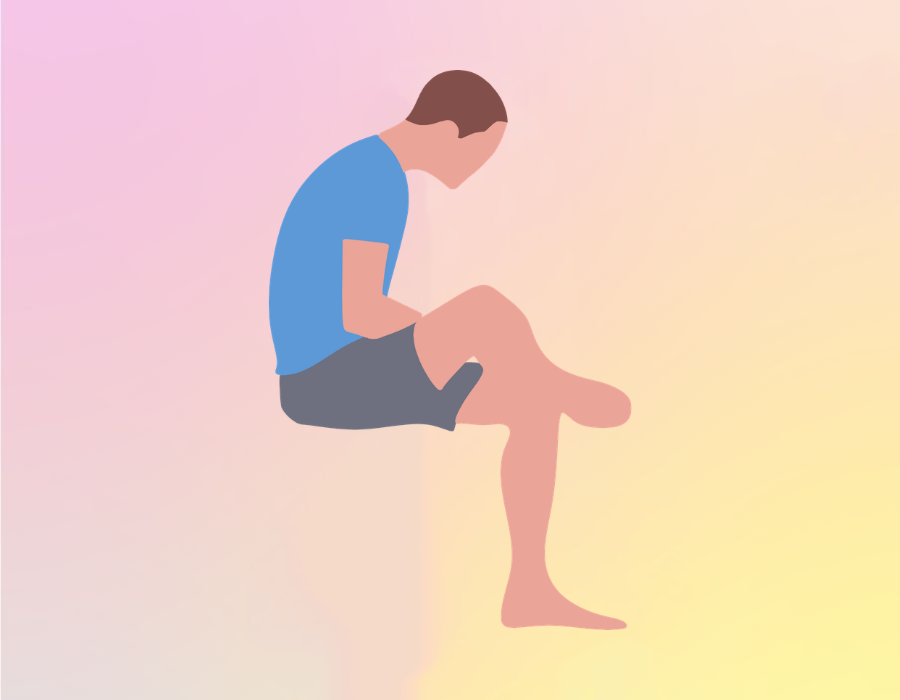
Middle-Aged and Older Adults Should Avoid Sit-Ups; Gentle Exercise Is the Easy Way to Get Rid of a Potbelly
If you have any queries or suggestions, please feel free to reach out via email to info@harisonfitness.com. We will do everything in our capacity to ensure that you love your experience with us.
As people reach middle age, even if they don’t eat much, they tend to gradually “put on weight,” and their entire body starts to look very bloated—especially the abdomen, which bulges out round and plump like a balloon and just won’t go away no matter how hard they try to lose it.
01 Why Is It So Easy to Gain Weight Around the Stomach?
Regardless of age, the human body exhibits the “proximal fat-to-center-of-gravity effect.” The waist and abdomen are where the body’s center of gravity is located, so there is often more fat in the waist, abdomen, and buttocks than in the limbs, and the ends of the limbs tend to be much slimmer than their bases. Therefore, weight gain always starts in the waist and abdomen, and the belly is the area most prone to fat accumulation.
A decline in basal metabolic rate is one of the key factors contributing to abdominal fat accumulation in middle-aged and older adults. As people age, their basal metabolic rate inevitably slows compared to when they were younger. When metabolic rate decreases, consumed calories accumulate and are converted into fat. Additionally, people who lead sedentary lifestyles tend to have very poor blood circulation in the waist and abdominal area, which also contributes to fat accumulation.
02 What Health Risks Does a Large Belly Pose?
Abdominal fat accumulation is particularly likely to lead to various diseases common among middle-aged and older adults, such as fatty liver disease, diabetes, and metabolic syndrome. Even if the abdominal fat does not affect one’s health, a protruding lower abdomen or a potbelly can negatively impact one’s appearance.
03 Why Older Adults Shouldn’t Do Sit-Ups
Middle-aged and older adults trying to get in shape may attempt to lose belly fat by doing sit-ups regularly, as most people believe sit-ups can eliminate abdominal fat. In fact, sit-ups are highly unsuitable for middle-aged and older adults! Most middle-aged and older adults have health issues with their lumbar and cervical spines. As people age, these areas undergo varying degrees of degeneration, and sit-ups can easily exacerbate damage to the lumbar and cervical vertebrae. Middle-aged and older adults suffering from lumbar disc herniation should absolutely avoid sit-ups, as doing so will worsen their condition!
Furthermore, sit-ups can cause blood pressure to rise. Many middle-aged and older adults suffer from hypertension, and sit-ups can easily trigger sudden health emergencies caused by elevated blood pressure. Middle-aged and older adults who want to reduce excess fat around their waist and abdomen can perform the following two exercises at home.
Exercise 1: Standing Against a Wall
Key Points: Stand with your body against a wall, tighten your glutes, and press your entire back firmly against the wall. Keep your head, shoulders, back, and glutes aligned in a straight line, with your heels touching the base of the wall. Hold this position for 15 minutes. It is recommended to perform this exercise half an hour after a meal. One set lasts 15 minutes; perform one set each at lunchtime and dinnertime daily.
Exercise 2: Diaphragmatic Breathing
Key Points: Perform this exercise while standing. Breathe in slowly and deeply through your nose. As you inhale, do not shrug your shoulders or expand your chest; instead, draw air into your abdomen as much as possible, allowing your abdomen to expand gradually. Exhale completely through your nose, expelling all the air from your abdomen as it gradually contracts, while keeping your shoulders and chest stable and still. One deep breath counts as one set; perform 20–30 sets daily.
These two exercises are relatively gentle and are ideal for middle-aged and older adults who need to strengthen their abdominal muscles.
In our view, weight loss for middle-aged and older adults cannot be achieved overnight, nor should one blindly pursue rapid results. This demographic should avoid overly strenuous exercise and, whenever possible, tailor an exercise plan to their physical condition, allowing the body to gradually return to a healthy state through a step-by-step process.


Leave a Reply
Want to join the discussion?Feel free to contribute!