
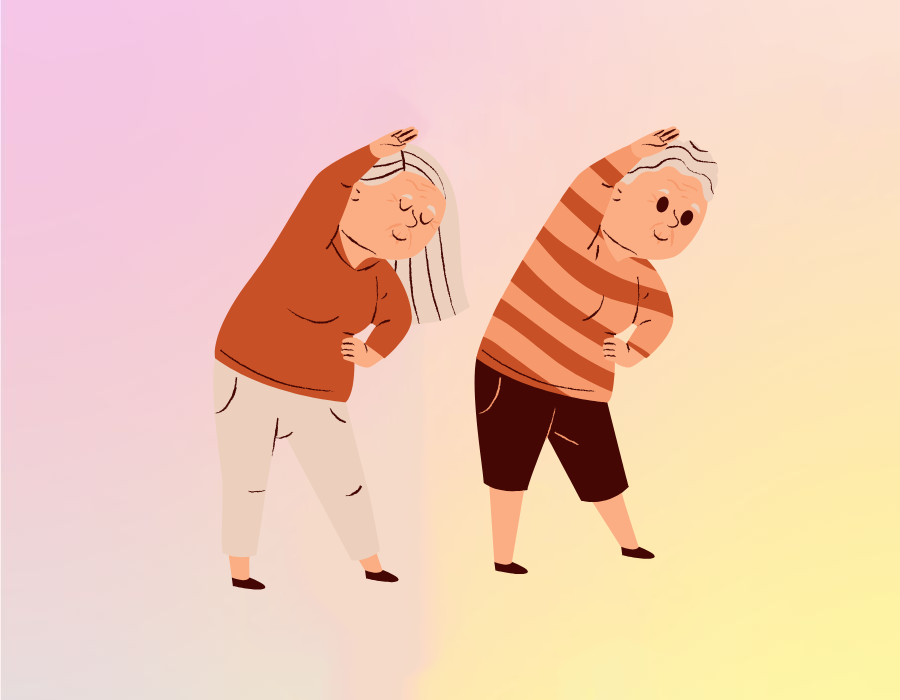
Regular Exercise Offers Many Benefits: How Older Adults Can Work Out at Home
If you have any queries or suggestions, please feel free to reach out via email to info@harisonfitness.com. We will do everything in our capacity to ensure that you love your experience with us.
It’s common to see older adults getting up early to practice tai chi in the park and going out for a walk after dinner. For middle-aged and older adults, this isn’t just a form of exercise—it’s also a meaningful way to spend their time. Here are a few exercises that can be done at home, giving older adults something to do and a way to stay active without having to leave the house.
01 Common Misconceptions About Exercise Among Middle-Aged and Older Adults
1. Limb Pain and Inability to Exercise
As people age, their bodies begin to develop various ailments; lower back pain and leg pain are common occurrences. Many older adults believe that because they already experience pain, exercise is not suitable for them and will only worsen the damage to their bodies. In fact, older adults with limb pain should engage in moderate exercise even more. It is important to note, however, that if the pain is caused by an injury, exercise should not be undertaken carelessly. If the pain is related to the aging of bones and muscles, scientifically designed exercises are necessary; such exercises can help alleviate the suffering caused by these conditions.
2. Not All Exercise Is Beneficial to the Body
Prolonged dancing, shoulder swings, waist twists, walking backward, sit-ups, and similar activities are not suitable for middle-aged and older adults. It is now quite popular for older men and women to gather after meals to dance in public squares, but some of these dance moves are not appropriate for this age group. Prolonged jumping can damage the joints. Shoulder swings and waist twists can cause injury to the shoulders and lower back, respectively. Walking backward causes the heart rate to increase, which can easily put extra strain on the heart. Frequently turning the head while walking backward is particularly harmful to the cervical spine. Sit-ups are a very strenuous exercise for middle-aged and elderly people, placing high demands on the lower back and legs; therefore, this type of exercise is not suitable for them.
3. Early morning and after meals are the best times to exercise
Many older adults enjoy morning exercise, believing that the morning is the prime time for physical activity. In fact, exercising in the evening is better than in the morning. This is because the air is at its most polluted about one or two hours after sunrise, when carbon dioxide levels are very high, making it unsuitable for older adults with respiratory conditions to exercise.
I’m sure many people have heard the saying, “Take a hundred steps after a meal, and you’ll live to be ninety-nine,” but this is incorrect. After a meal, the strain on the heart increases, and walking at this time can have adverse effects on the cardiovascular and cerebrovascular systems. It’s also a misconception that exercise is only effective if you sweat. Some people sweat very little during exercise due to physical conditions, while for others, sweating during exercise isn’t entirely due to the exercise itself.
02 Exercises Suitable for Middle-Aged and Older Adults
1. Marching in Place
Marching in place doesn’t require much physical exertion, and there’s no need to focus on speed. It helps middle-aged and older adults relax and exercise their muscles and joints throughout the body, while also helping to ease the mind. You can even do this at home without going outside.
2. Tai Chi
Tai Chi is a treasure of Chinese culture. It emphasizes internal energy and is ideal for middle-aged and older adults; all you need is a slightly spacious area. When practicing Tai Chi, remember to move slowly and find an intensity level that suits you.
3. Yoga
Yoga is also an excellent form of exercise for middle-aged and older adults. With its wide variety of poses, you can start with the simplest ones and progress gradually. It effectively slows down the aging process and improves physical fitness.
Everyone’s physical condition is different. If you want to exercise, you should first develop a suitable exercise plan based on your individual circumstances—only scientifically sound exercise is effective.


Leave a Reply
Want to join the discussion?Feel free to contribute!