
How to Prevent Groin Strains? Follow These Exercises for a Speedy Recovery After a Strain
If you have any queries or suggestions, please feel free to reach out via email to info@harisonfitness.com. We will do everything in our capacity to ensure that you love your experience with us.
Groin strains are very common, especially among athletes and young children. Although they aren’t a serious condition, they can cause significant pain when they occur. So, is it possible to effectively prevent this type of injury?
01 How to Prevent Groin Strains
Before exercising, it is essential to warm up properly and stretch your muscles and ligaments. Doing so will significantly reduce the risk of injury during your workout. Additionally, while everyone strives to be the best during exercise, it’s important to do your best within your limits. If you can’t achieve perfection, don’t push yourself too hard. Even if it’s not a competition but just regular training, you should proceed gradually. Don’t try to rush the process, or you’ll not only fail to achieve your fitness goals but also risk injury.
Whether you’re an athlete or an average person, you must protect yourself during exercise. If possible, wear compression gear while working out. This type of clothing supports your muscles, helping them stay engaged and preventing injuries caused by muscle laxity and the inability to generate force.
After exercising, regardless of how you feel at the time, it’s best to get a massage—whether a simple rub or a session with a professional. This helps relieve tight muscles, allowing your body to relax and preventing injuries.
In your regular fitness routine, you can also incorporate exercises that build muscle strength, such as sit-ups and planks. These exercises stretch your muscles and increase muscle strength. By building strong, powerful muscles, you’ll be less likely to strain yourself when suddenly engaging in physical activity.
02 Daily Management of Groin Strains
After suffering a groin strain, it is essential to maintain a scientifically sound and reasonable daily routine. Your diet should be as light as possible, with an emphasis on foods rich in protein and vitamins. Avoid greasy and spicy foods, as these will not only hinder recovery but also be detrimental to your overall health.
Additionally, after the injury, you must cease all physical activity, get plenty of bed rest, maintain good hygiene, and cultivate a relaxed and positive mindset. This will help minimize recovery time as much as possible.
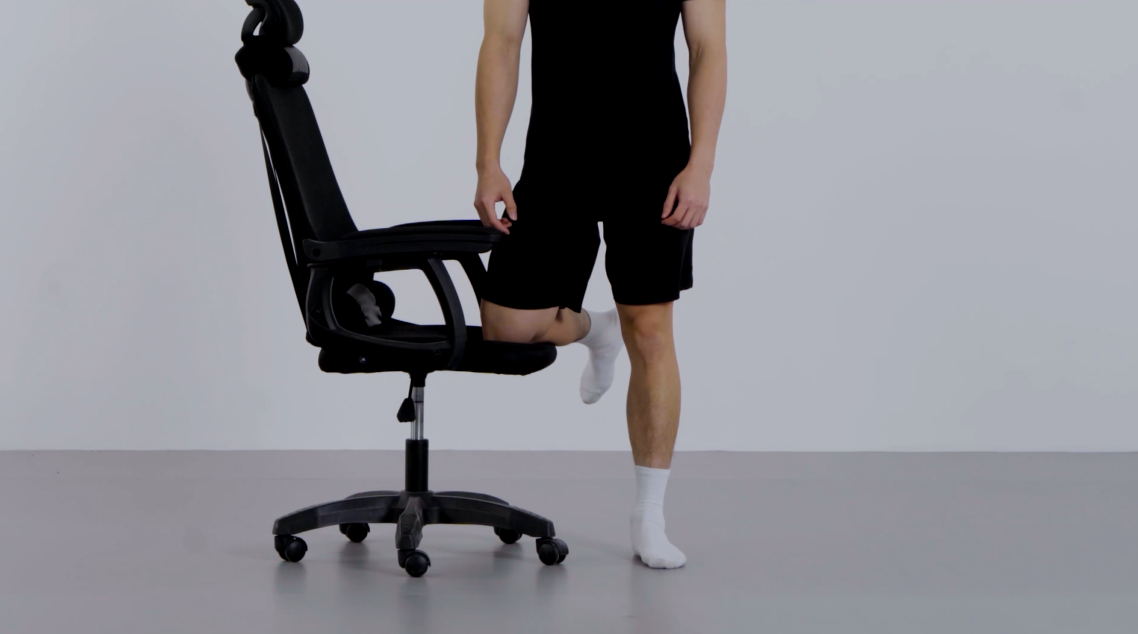
Exercise 1: Wheeled Thigh Adduction
Key Points: Perform this exercise while standing. Keep your upper body upright, with the unaffected leg planted firmly on the ground and held stationary. Kneel on a wheeled chair with the injured leg, abduct the leg outward, push the chair away, and then pull it back. Note: The chair should ideally be at knee height. Repeat this exercise, performing 2 sets of 8 repetitions each.
Exercise 2: Side Plank
Key Points: Lie on your side with your upper body upright. Place the forearm of one arm flat on the ground, with the upper arm at a 90-degree angle to the floor, while extending the other arm straight upward. Stack both legs on the ground, bending the lower leg backward to form a 90-degree angle with the thigh. Perform this exercise in 2 sets, with each set lasting 20 seconds.
Exercise 3: Lateral Cross-Step
Key Points: Stand with your upper body upright and hands on your hips. Step one leg back and cross it behind the other, alternating sides. Perform this exercise in 2 sets, with 8 repetitions per set.
These three exercises can help improve lower-body joint stability, restore mobility, and increase overall strength. It is best to perform this training 40 minutes after a meal, 2 to 3 times daily.


Leave a Reply
Want to join the discussion?Feel free to contribute!