
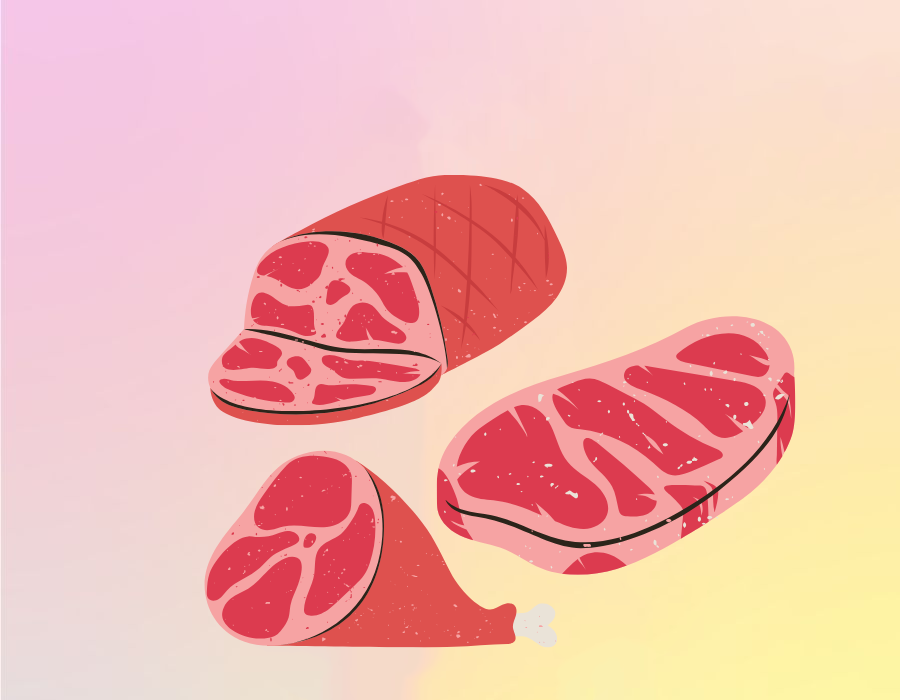
Fat is the foundation—not a stumbling block on your weight loss journey!
If you have any queries or suggestions, please feel free to reach out via email to info@harisonfitness.com. We will do everything in our capacity to ensure that you love your experience with us.
Fat is one of the three major macronutrients in human metabolism. A long-term lack of fat in your diet will not benefit your body; on the contrary, it will gradually undermine your health. Whether in your daily diet or while trying to lose weight and body fat, you must not go without fat for an extended period.
01 The Importance of Fat to the Human Body
The idea that fat accounts for about 30% of total dietary calories—and that eating meat leads to weight gain or that consuming too much fat is harmful to health—has become deeply ingrained in people’s minds, particularly among middle-aged and older adults. Fat is viewed as the primary culprit behind obesity and cardiovascular disease, to the point where people are afraid to eat it. As a result, food is often cooked without oil year-round, and it’s rare to see even a few slices of meat on the table.
However, avoiding fat increases the risk of suboptimal health. As an essential component of the human body, fat is a primary constituent of cell membranes. For example, 60% of human brain tissue is fat. Therefore, conversely, if one does not consume enough fat, the brain will not be properly nourished. This is particularly concerning for the elderly, who are more susceptible to Alzheimer’s disease; thus, it is important to consume healthy fats that benefit brain health. Fat is a primary nutrient for storing and supplying energy—one of the fuels of life—and accounts for approximately 15% of the human body. Each gram of fat provides more than twice the energy of each gram of carbohydrates or protein.
02 Cutting out all fat doesn’t necessarily lead to weight loss
A common misconception about fat intake is that people overlook the fact that the meat, vegetables, and even fruits they consume daily contain fat. Therefore, as long as one’s diet is balanced, fat intake is sufficient. The problem is that, given today’s lifestyle, the root cause of obesity is that energy intake exceeds energy expenditure; combined with a lack of exercise, fat accumulates.
When fat intake is insufficient, the body compensates by consuming large amounts of carbohydrates and protein to make up for the missing calories. This can lead to an excess of calorie intake, and the surplus calories are converted into fat, stored in the body, and accumulate into an obese physique. However, the human body cannot synthesize certain essential fatty acids and must obtain them from food. Avoiding fat entirely can lead to malnutrition. Furthermore, for those trying to lose weight, a fat-free diet is not effective. For example:
Women who avoid fat experience more noticeable signs of aging, such as visible nasolabial folds and rough skin. They may also suffer from weakened immunity, endocrine and metabolic disorders, and even amenorrhea. Men who avoid fat may experience a decrease in testosterone levels, leading to reduced muscle mass and increased body fat. They are also at higher risk of osteoporosis and may experience mood swings.
03 How to Choose Healthy Fats
So, there are good fats and bad fats, and you need to clearly understand how to consume fats that are beneficial to your health.
(1) Saturated fatty acids are commonly found in red meats such as pork, beef, and lamb, as well as in the fat of fresh milk. Saturated fatty acids raise levels of LDL cholesterol in the body, and excessive intake increases the risk of cardiovascular disease.
(2) Trans fatty acids are harmful to health and are not essential nutrients for the human body. Consuming trans fats increases the likelihood of developing coronary heart disease. When cooking, avoid heating oil until it smokes or repeatedly frying foods, as this can increase trans fat levels. Most trans fats are formed through artificial catalytic hydrogenation and refining processes and are used to improve a food’s appearance, shelf life, and flavor.
(3) Eat more unsaturated fatty acids. Unsaturated fatty acids are divided into monounsaturated and polyunsaturated fatty acids. Monounsaturated fatty acids can be obtained by cooking with olive oil or by eating nuts and avocados, which help reduce the risk of cardiovascular disease.


Leave a Reply
Want to join the discussion?Feel free to contribute!