What is the carb cycling diet, and how effective is it?

If you have any queries or suggestions, please feel free to reach out via email to info@harisonfitness.com. We will do everything in our capacity to ensure that you love your experience with us.

As obesity has become a widespread health issue, people have begun to recognize the severity of the problem. With the growing popularity of national fitness initiatives, the carb cycling diet has entered the public consciousness. So what exactly is this weight-loss method, and how should it be implemented?

01 What Is a Carb Cycle?

The carb cycling method is a weight loss and body sculpting approach that involves controlling daily carbohydrate intake. From a weight loss perspective, the goal is to ensure that energy intake is less than energy expenditure, thereby creating a calorie deficit. Unlike conventional weight loss methods, the carb cycling method involves incorporating several days of high-carbohydrate meals into a weekly or custom-designed cycle, combined with exercise to promote weight loss. The true purpose of this dietary approach, when paired with exercise, is to avoid the plateau caused by a decrease in basal metabolic rate during the fat loss process, break through that plateau, and achieve fat loss through a negative energy balance.

02How to Perform Carb Cycling

Daily Carb Method: This method involves having one large carb-rich meal per day and minimizing carb intake during other meals. The carb-rich meal should be consumed one hour after a high-intensity workout. If it is a rest day with no exercise, you should control your diet by avoiding or minimizing carb intake.


Weekly Carb Cycle: You can tailor this to your actual training schedule: high-intensity training days = high-carb days, moderate-intensity training days = moderate-carb days, and rest days = low-carb days. As the name suggests, on high-carb days you eat plenty of carbs, on moderate-carb days you eat a small amount, and on low-carb days you avoid carbs entirely.


Monthly Carb Cycle: This method is suitable for those who maintain a long-term high-intensity training regimen. Set a monthly goal and create a carb cycle based on your actual situation. The principle is largely the same as the weekly carb cycle, determined by your training intensity. In summary, the dietary approach should be:

High-Carb Days: Consume high carbohydrates, low fat

Low-Carb Days: Consume high fat, low carbohydrates

03 What Are the Benefits of a Carb Cycle?

Carb cycling is particularly well-suited for those who struggle with self-discipline, especially Chinese people. Since our daily diet is primarily carbohydrate-based, it’s very difficult to give them up entirely. Carb cycling days allow us to indulge occasionally and satisfy our cravings. Fitness enthusiasts can combine daily and weekly carb cycling to rapidly build muscle and lose fat, while monthly carb cycling helps break through plateaus and keeps the body’s metabolism at a relatively high level.

Don’t turn down these healthy fats—you can still enjoy them while trying to lose weight.

If you have any queries or suggestions, please feel free to reach out via email to info@harisonfitness.com. We will do everything in our capacity to ensure that you love your experience with us.

Getting enough healthy fats is essential for our physical health. Vitamins are essential nutrients, and they are all fat-soluble. In other words, the absorption of vitamins requires the assistance of fat. If the body lacks fat, certain essential nutrients cannot be absorbed. Therefore, healthy fats should be incorporated into our daily diet. In fact, consuming high-quality fats in moderation not only enhances the body’s nutrient intake but also aids in weight loss. The following types of high-quality fats are very healthy and suitable for daily consumption.

01 High-quality vegetable oil

Consuming the right amount of coconut oil can boost the body’s immunity. Not only does it help us fight off bacteria and viruses, but it also has certain effects against fungi and candida. Coconut oil contains a saturated fatty acid called “lauric acid.” Although it is high in calories, its saturated fatty acids can stimulate the body’s metabolism and provide sufficient energy. At the same time, it promotes thyroid function, which means the body’s energy is burned more efficiently, accelerating the weight loss process.

Another high-quality vegetable oil is cold-pressed olive oil. It inhibits the formation of adenosine triphosphate (ATP), a high-energy phosphate molecule; the more ATP accumulates, the more likely it is to lead to obesity. Therefore, cold-pressed olive oil is widely recognized as an effective tool for weight loss.

02 Cold-water and deep-sea fish oil

Deep-sea cold-water fish, such as fatty wild salmon and tuna, are rich in omega-3 fatty acids, which are a type of unsaturated fatty acid. These consist of long chains formed by linked carbon and hydrogen atoms, with 3 to 6 unsaturated bonds, and are effective in reducing high blood pressure, high blood sugar, and high cholesterol. Additionally, there are natural DHA and EPA, which provide a range of health benefits. These compounds are widely used in the prevention and treatment of patients with high blood pressure, high blood sugar, and high cholesterol. Clinically, many diseases are associated with omega-3 fatty acids, and they can also reduce inflammatory responses in joint pain, providing effective protection during physical activity.

03 Nuts

In daily life, high-quality nuts include almonds and walnuts, which are nutritious and rich in omega-3 fatty acids. Consuming nuts in moderation is generally beneficial for weight loss and can reduce the risk of cardiovascular and cerebrovascular diseases as well as diabetes. It is worth noting that because nuts are high in calories, it is best not to eat too many at once. Otherwise, if the excess calories are not burned off in time, they will be converted into fat. Eating smaller portions more frequently is more beneficial for nutrient absorption and does not place an unnecessary burden on the body.

04 Avocado and Eggs

Egg yolks are also rich in omega-3 fatty acids. Although egg yolks contain cholesterol, this type of cholesterol is actually very beneficial for weight loss. They are also rich in B vitamins, choline, and other nutrients that help regulate the nervous and cardiovascular systems. While avocados are high in fat, the fats they contain are unsaturated. These fats not only protect heart health but also help burn excess body fat.


Summary: It is essential to include necessary fats in your daily diet, and choosing high-quality fats whenever possible is highly beneficial for your health. When trying to lose weight, avoid blindly restricting your diet; instead, combine exercise with a balanced diet that includes some healthy fats. Only by integrating these elements can you achieve the best results.

Fat is the foundation—not a stumbling block on your weight loss journey!

If you have any queries or suggestions, please feel free to reach out via email to info@harisonfitness.com. We will do everything in our capacity to ensure that you love your experience with us.

Fat is one of the three major macronutrients in human metabolism. A long-term lack of fat in your diet will not benefit your body; on the contrary, it will gradually undermine your health. Whether in your daily diet or while trying to lose weight and body fat, you must not go without fat for an extended period.

01 The Importance of Fat to the Human Body

The idea that fat accounts for about 30% of total dietary calories—and that eating meat leads to weight gain or that consuming too much fat is harmful to health—has become deeply ingrained in people’s minds, particularly among middle-aged and older adults. Fat is viewed as the primary culprit behind obesity and cardiovascular disease, to the point where people are afraid to eat it. As a result, food is often cooked without oil year-round, and it’s rare to see even a few slices of meat on the table.


However, avoiding fat increases the risk of suboptimal health. As an essential component of the human body, fat is a primary constituent of cell membranes. For example, 60% of human brain tissue is fat. Therefore, conversely, if one does not consume enough fat, the brain will not be properly nourished. This is particularly concerning for the elderly, who are more susceptible to Alzheimer’s disease; thus, it is important to consume healthy fats that benefit brain health. Fat is a primary nutrient for storing and supplying energy—one of the fuels of life—and accounts for approximately 15% of the human body. Each gram of fat provides more than twice the energy of each gram of carbohydrates or protein.

02 Cutting out all fat doesn’t necessarily lead to weight loss

A common misconception about fat intake is that people overlook the fact that the meat, vegetables, and even fruits they consume daily contain fat. Therefore, as long as one’s diet is balanced, fat intake is sufficient. The problem is that, given today’s lifestyle, the root cause of obesity is that energy intake exceeds energy expenditure; combined with a lack of exercise, fat accumulates.


When fat intake is insufficient, the body compensates by consuming large amounts of carbohydrates and protein to make up for the missing calories. This can lead to an excess of calorie intake, and the surplus calories are converted into fat, stored in the body, and accumulate into an obese physique. However, the human body cannot synthesize certain essential fatty acids and must obtain them from food. Avoiding fat entirely can lead to malnutrition. Furthermore, for those trying to lose weight, a fat-free diet is not effective. For example:


Women who avoid fat experience more noticeable signs of aging, such as visible nasolabial folds and rough skin. They may also suffer from weakened immunity, endocrine and metabolic disorders, and even amenorrhea. Men who avoid fat may experience a decrease in testosterone levels, leading to reduced muscle mass and increased body fat. They are also at higher risk of osteoporosis and may experience mood swings.

03 How to Choose Healthy Fats

So, there are good fats and bad fats, and you need to clearly understand how to consume fats that are beneficial to your health.


(1) Saturated fatty acids are commonly found in red meats such as pork, beef, and lamb, as well as in the fat of fresh milk. Saturated fatty acids raise levels of LDL cholesterol in the body, and excessive intake increases the risk of cardiovascular disease.


(2) Trans fatty acids are harmful to health and are not essential nutrients for the human body. Consuming trans fats increases the likelihood of developing coronary heart disease. When cooking, avoid heating oil until it smokes or repeatedly frying foods, as this can increase trans fat levels. Most trans fats are formed through artificial catalytic hydrogenation and refining processes and are used to improve a food’s appearance, shelf life, and flavor.


(3) Eat more unsaturated fatty acids. Unsaturated fatty acids are divided into monounsaturated and polyunsaturated fatty acids. Monounsaturated fatty acids can be obtained by cooking with olive oil or by eating nuts and avocados, which help reduce the risk of cardiovascular disease.


Commercial vs Home Dumbbells: Hex vs Round vs Adjustable – How to Choose?

You’re shopping for dumbbells. Hex. Round. Adjustable. Commercial. Home.

Which one is right for you? 👇


First: Where Will You Use Them?

Home gym – space is tight. One set needs to do the job of ten.

Commercial gym – durability is king. Members drop weights hundreds of times a day.


Hex vs Round Dumbbells

Hex dumbbells don’t roll. Drop them on an uneven garage floor? They stay put. Great for floor exercises like renegade rows and push-ups.

Round dumbbells are the commercial gym standard. Same head size across all weights. Racks look clean. You can put your logo on the ends.

Pick hex for home. Pick round for commercial.


Adjustable Dumbbells

For home – One set replaces 10+ pairs. Swap weights in seconds. Saves a ton of space.

For commercial – Don’t do it. Plastic parts break. Mechanisms jam when dropped. Members will destroy them.

Adjustable at home. Fixed in the gym.


Rubber vs Urethane

Material Durability Best For
Rubber Medium (replace every few years) Home
Urethane High (3-5x longer) Commercial

Urethane costs more upfront. But replacing rubber every two years? That adds up. Brands like HARISON go straight to urethane at rubber prices — factory-direct, no middleman.


What Should You Buy?

Your Situation Best Choice
Home gym, tight space Adjustable
Home gym, plenty of space Hex rubber (5-50 lbs)
Commercial gym Urethane round
Tight budget Hex rubber, start with common weights

Need commercial-grade quality without the markup? HARISON is worth a look — factory-direct, U.S. inspected.


Bottom Line

There’s no “best” dumbbell. Only the best for YOUR setup.

Don’t buy round for home (they roll). Don’t buy adjustable for commercial (they break).

Pick the right type. Don’t waste money.


FAQ

1. Hex or round for home gym? – Hex. Won’t roll away.

2. Most durable coating? – Urethane. Lasts 3-5x longer than rubber.

3. Can you drop adjustable dumbbells? – No. Great for home, bad for commercial.

4. How much weight for home gym? – 5-50 lbs covers 90% of exercises.

5. How to choose a brand? – Look for factory-direct. Less markup, better value.

Treadmill Cushioning Systems – Rubber vs Spring vs Air – Which Is Better?

Why Treadmill Cushioning Matters for Your Joints

Research shows cushioned decks reduce peak plantar forces at your forefoot and midfoot. Lab testing found treadmills provide 64.2% average shock absorption – way higher than concrete or asphalt. Proper cushioning can help reduce your risk of stress fractures and joint fatigue.

Real talk: A gym owner in Texas switched to HARISON cushioned treadmills and saw a 40% drop in member joint complaints within 6 months.


Three Treadmill Cushioning Technologies Compared

🟢 Treadmill Rubber Cushioning – The Reliable Standard

Rubber bushings or elastomers sit between the deck and frame. They’re silent, have no moving parts, and deliver a consistent feel. The catch? Generally non-adjustable. Lifespan runs 5-8 years.

Best for: Most home users and light commercial settings.


🔵 Treadmill Spring Cushioning – The Responsive Choice

Coil springs give you bounce and can offer adjustability. But here’s what happens over time: squeaking, springs losing elasticity. You’ll get 3-5 years before they start to degrade.

Best for: Budget-conscious buyers who want some responsiveness.


🟣 Treadmill Air Cushioning – The Premium Innovation

Air-filled chambers compress under impact. You can adjust firmness, and newer systems use real-time sensors to auto-adjust based on your weight and stride. Superior shock absorption. Higher cost, more complex tech.

Best for: Serious runners and commercial facilities where joint protection is priority #1.


What HARISON Offers

HARISON Treadmills feature the Soft Drop Suspension system – engineered for high-impact cushioning without sacrificing stability. U.S. quality inspected. Built for both commercial and home use.


Conclusion

🟢 Rubber: Most durable, lowest maintenance.
🔵 Spring: Responsive feel but wears out faster.
🟣 Air: Premium adjustable cushioning for serious protection.

HARISON gives you commercial-grade cushioning with U.S. quality standards. Your joints will thank you.

👉 Explore HARISON treadmills →

FAQ

1. Is treadmill running worse for your knees than outdoor running?

No – research shows treadmills provide significantly higher shock absorption (64.2%) than concrete or asphalt, actually reducing impact forces compared to outdoor running.

2. Can you adjust the firmness of a treadmill deck?

Some premium treadmills offer adjustable cushioning. Rubber systems are typically fixed. Air cushioning systems allow firmness adjustment, and advanced models can auto-adjust based on your weight and stride.

3. How long does treadmill cushioning last?

Rubber elastomers typically last 5-8 years. Springs may start losing elasticity after 3-5 years. Air systems require minimal maintenance but are more complex to repair.

4. Do HARISON treadmills have good shock absorption?

Yes – HARISON treadmills feature a Soft Drop Suspension system designed for high-impact cushioning, protecting your joints during intense workouts.

5. What’s better for heavy runners – rubber or air cushioning?

Air cushioning generally performs better for heavier users because it can be adjusted or auto-regulated based on weight. Fixed rubber systems are designed for average weight ranges (up to ~250-300 lbs).


Commercial Weight Plates – Cast Iron vs Rubber vs Steel – Which Lasts Longer?

Lifespan Comparison at a Glance

Material Type Expected Lifespan Best For
Cast Iron 1.5 – 3 years Budget setups, light use
Rubber-Coated 3 – 5 years Mid-range gyms, moderate traffic
Steel / Urethane 8 – 12+ years Heavy commercial use

Real talk: A gym in Chicago replaced their cast iron plates every 18 months. After switching to HARISON commercial-grade plates? Zero replacements in 4 years.


Breaking Down Each Material

Cast Iron – The Budget Trap

Cast iron looks cheap upfront ($1.50-$2.00/lb). But here’s what happens: rust, chipping, cracking. In commercial settings? You’re replacing them every 1.5-3 years. Plus they’re loud and destroy your flooring.

Rubber-Coated – The Middle Ground

Rubber coating is quieter and protects your floors. But that coating cracks and peels over time. You’ll get 3-5 years out of them. And cheap rubber smells like a tire factory.

Steel & Urethane – The Real Investment

This is where grown-ups shop. Urethane is scratch-resistant, odorless, and tough as nails. Steel plates can last decades if you’re not dropping them from overhead. Higher upfront cost? Yes. Lower cost per year? Absolutely.

HARISON commercial plates are engineered for daily heavy use – with U.S. quality inspection and 2-hour service response.


What HARISON Offers

  • U.S. quality inspected components

  • Built for high-traffic commercial environments

  • Compatible with all HARISON plate-loaded machines

  • Dedicated support team


Conclusion

Cast iron steals your budget through constant replacements. Rubber-coated is fine – until the coating isn’t. Steel and urethane? That’s the long play.

HARISON delivers commercial-grade durability without the headaches. Your gym deserves better than replacing plates every 18 months.

👉 Explore HARISON commercial strength →


FAQ

1. How often do commercial gyms need to replace weight plates?

Cast iron plates typically need replacement every 18-24 months in busy commercial settings. Urethane and high-quality steel plates can last 8-12+ years with proper care.

2. Are rubber-coated weight plates worth the extra cost?

For moderate-use facilities, yes – they reduce noise and protect floors. But for high-volume gyms, urethane offers better longevity and doesn’t crack or peel like rubber.

3. Can you drop urethane weight plates?

Urethane plates are not designed for repeated overhead dropping like bumper plates. They excel on plate-loaded machines and general strength training where controlled movements are used.

4. What causes cast iron plates to rust?

Moisture and sweat. In humid gym environments, uncoated cast iron oxidizes quickly. Regular wiping and climate control help, but coated options are more practical.

5. Does HARISON offer commercial-grade weight plates?

Yes – HARISON manufactures commercial strength equipment with U.S. quality inspection, designed for daily heavy use in professional gym environments.

Spin Bike Flywheel Weight – 18kg vs 25kg Ride Difference | HARISON

Spin Bike Flywheel Weight – How Much Difference Does 18kg vs 25kg Actually Make? 🚴‍♂️⚙️

You’re shopping for a spin bike and see flywheel weights ranging from 8kg to 25kg. Some brands swear by heavy flywheels. Others say lighter is better. What’s the real difference between 18kg and 25kg? Does it actually matter? Let’s break it down. 

What Does a Flywheel Actually Do? 🔧

The flywheel stores kinetic energy as you pedal. Heavier flywheels maintain momentum longer between pedal strokes, creating a smoother, more continuous ride. Think of it like riding a real outdoor bike – once you get going, the momentum carries you forward smoothly.

18kg vs 25kg – The Real Ride Differences 📊

Ride Smoothness

Heavier flywheels (20kg+) reduce pedal stroke fluctuations by 40-50%, keeping cadence consistent. A 25kg flywheel feels noticeably smoother than 18kg, especially during high-intensity sprints or climbs.

Starting & Stopping Effort

Lighter flywheels (13-18kg) require less force to start and stop, making them more joint-friendly for beginners. Heavier flywheels (20-25kg) need more initial effort but maintain momentum better once moving.

Road Realism

Heavy flywheels (22-25kg) simulate outdoor cycling more accurately. The added inertia mimics riding a real road bike, preferred by serious cyclists. Light flywheels can feel “choppy” at high intensity.

Which Flywheel Weight Is Right for You? 🎯

User Type Recommended Flywheel Why
Beginners / Light users 13-18kg Easier to start, gentler on joints
Regular fitness enthusiasts 18-20kg Best balance of smoothness and control
Heavy users (80kg+ body weight) 20-25kg Needs more mass for stable inertia
Serious cyclists / Commercial gyms 22-25kg Most realistic road feel, max durability

HARISON Flywheel Technology – Built for Real Results ✅

HARISON spin bikes feature precision-balanced flywheels tested for consistent performance. Whether you choose our 13kg or 20kg models, every HARISON flywheel delivers smooth, quiet operation – no wobble, no noise.

HARISON understands that one weight doesn’t fit all. That’s why our lineup includes options from 13kg to 20kg, matching different rider needs. Built for commercial durability with residential convenience.

Conclusion – Match Flywheel to Your Goals 🎯

The difference between 18kg and 25kg is real – but neither is “better.” Heavier flywheels (22-25kg) deliver smoother momentum and road-like realism, ideal for serious cyclists and commercial gyms. Mid-range flywheels (18-20kg) offer the best balance for most home users. Lighter options (13-18kg) are easier on joints for beginners.

Choose based on your body weight, fitness level, and how you plan to ride. HARISON spin bikes give you the right flywheel for your goals – without cutting corners.

Shop HARISON Spin Bikes | Request a Quote

Frequently Asked Questions (FAQ) ❓

Q1: Is a 25kg flywheel too heavy for home use?

A: Not necessarily. Riders over 80kg benefit from heavier flywheels for stable momentum. But lighter users may find 25kg harder to start.

Q2: Does flywheel weight affect noise level?

A: Not directly. Noise comes from resistance type (magnetic vs friction) and belt quality. HARISON uses magnetic resistance for quiet operation.

Q3: Can beginners use a heavy flywheel bike?

A: Yes, but lighter flywheels (13-15kg) are more joint-friendly and easier to control. Start lighter, then upgrade as you get stronger.

Q4: How much flywheel weight do commercial gyms use?

A: Most commercial spin bikes use 20-22kg flywheels, balancing durability with smooth ride quality.

Q5: Does a heavier flywheel burn more calories?

A: No. Calorie burn depends on your effort (watts), not flywheel weight. But heavier flywheels can help maintain consistent effort during intense intervals.

Why Gym Equipment Paint Peels – Electrostatic Coating Guide | HARISON

Why Some Gym Equipment Peels and Some Doesn’t – The Truth About Electrostatic Spraying 🎨🏋️

You’ve seen it before – expensive gym equipment with paint peeling off, exposing rusty metal underneath. Meanwhile, other machines look brand new after years of use. What’s the difference? The answer lies in how they were painted. HARISON equipment is built to last.

What Is Electrostatic Spraying? 🔧

Electrostatic spraying gives paint particles a positive charge while the metal frame is negatively charged. The opposite charges pull the paint onto the surface – like a magnet. This creates a bond that’s much stronger than regular spray painting.

Why Some Equipment Peels – 3 Common Problems 🚫

Problem #1 – Poor Pre-Treatment

Before painting, metal must be cleaned of oil and rust. Some manufacturers rush this step. Leftover acid from poor cleaning corrodes the metal under the paint. Result? Peeling within months.

Problem #2 – Thin or Uneven Coating

Quality coating requires proper thickness (at least 100um). Cheap manufacturers apply thinner coats to save money. Thin paint chips easily and doesn’t protect against moisture.

Problem #3 – Wrong Curing Temperature

Powder coating must be baked at 180-220°C. If the temperature is off or time is too short, the paint won’t bond properly. It looks fine at first – then fails within a year.

How HARISON Ensures Paint That Lasts ✅

Strict Pre-Treatment Process

HARISON uses thorough cleaning and phosphating before any paint touches the metal. No shortcuts. No acid.

Proper Coating Thickness & Baking

Every HARISON frame gets consistent coating thickness and is baked at the correct temperature for the right duration. Our quality control team checks every batch.

Real-World Durability

HARISON commercial equipment is designed for daily heavy use – including finishes that stay intact for years. That’s why gym owners trust our brand.

Conclusion – You Get What You Pay For 🎯

Cheap equipment peels because corners were cut before you ever saw the paint. HARISON builds fitness equipment the right way – including proper electrostatic spraying that actually lasts. Your equipment is an investment. Make sure it looks as good as it performs.

Shop HARISON Equipment 

Frequently Asked Questions (FAQ) ❓

Q1: Can I repaint peeling gym equipment myself?

A: It’s difficult. The old coating must be completely stripped, and the metal needs professional pre-treatment. Most DIY repainting fails within months.

Q2: How can I tell if a machine has quality paint before buying?

A: Look at weld joints and corners. Poor quality shows as thin spots or uneven coverage in hard-to-reach areas.

Q3: Does powder coating protect against rust?

A: Yes, if applied correctly. The coating seals out moisture. But any scratch that exposes bare metal can lead to rust over time.

Q4: How long should gym equipment paint last?

A: With proper electrostatic spraying and normal use, 5-10 years. Heavy commercial use may show wear sooner, but shouldn’t peel.

Q5: Is HARISON’s paint eco-friendly?

A: Yes. HARISON uses powder coating that contains no solvents and meets environmental standards.

Commercial Elliptical Stride Length – Gym Standard Guide | HARISON

Commercial Elliptical Stride Length – What’s the Gym Standard? 📏🏋️

Buying ellipticals for your gym? Stride length is the #1 spec that affects member comfort. Too short, and tall users feel cramped. Too long, and you waste floor space. Here’s what the industry standard actually is. 

What Is Stride Length and Why Does It Matter? 🤔

Definition: Stride length is the distance the pedals travel from front to back. It determines how natural the elliptical motion feels. HARISON engineers design every commercial model with this principle in mind.

Why it matters: Get it wrong, and members will avoid that machine. Too short = choppy stride. Too long = over-reaching. Both cause discomfort and hurt retention. That’s why HARISON focuses on getting this spec right.

The Real Standard: 18-22 Inches ✅

After looking at what actually works in real gyms, the industry standard for commercial elliptics is 18-22 inches.

  • Below 18 inches? That’s home or light-commercial territory. Real gyms need more.

  • Above 22 inches? That’s for specialized facilities. Most commercial gyms don’t need it.

This range comfortably serves members from 5’4″ to 6’0″

HARISON DISCOVER E3800 Ellipticals– Built to the Standard 🏆

The HARISON DISCOVER E3800 Ellipticals delivers exactly what a commercial gym needs: a true 20-inch stride – right in the sweet spot of the industry standard.

With a 20-inch stride, the E3800 comfortably fits members from 5’4″ to 6’0″. It’s built for real commercial use, with a solid frame and commercial-grade components.

Why the Right Stride Matters for Your Gym 🎯

Some brands sell “commercial” ellipticals with short 14-16 inch strides. Members notice the difference immediately. The HARISON DISCOVER E3800 gives you the true 20-inch commercial stride your members need.

Conclusion – Buy the Right Spec for Real Gyms 🎯

The industry standard for commercial ellipticals is 18-22 inches. The HARISON DISCOVER E3800 delivers a true 20-inch stride.

Built for real commercial gyms. Ready for your facility.

Shop HARISON DISCOVER E3800 | Request a Quote

Frequently Asked Questions (FAQ) ❓

Q1: Is a 20-inch stride long enough for tall members?

A: Yes. A 20-inch stride comfortably serves members up to about 6’0″.

Q2: How does the E3800 compare to cheaper ellipticals?

A: Cheaper ellipticals often have 14-16 inch strides. The E3800’s 20-inch stride delivers a true commercial-grade experience.

Q3: What warranty does the E3800 come with?

A: HARISON offers commercial-grade warranties. Contact our team for specific terms.

Q4: Can I test the E3800 before buying?

A: Contact your local HARISON dealer or request a demo through our website.

Q5: Is the E3800 easy to move?

A: Yes, it has front transport wheels for easy positioning and cleaning.

Selectorized vs Plate-Loaded Machines | Commercial Gym Guide | HARISON

Selectorized vs Plate-Loaded Machines – Which Is Better for Your Gym? 🏋️‍♂️⚖️

Buying commercial strength equipment is a major investment – a full 12-18 machine line typically costs 40,000to120,000. Facing the choice between selectorized (weight stack) and plate-loaded machines, many gym owners feel confused. Selectorized machines are quick and easy for the general crowd. Plate-loaded machines offer higher resistance ceilings and appeal to serious lifters. This guide helps you find the right mix for your facility. HARISON offers both types as part of our complete commercial strength lineup.

1. What Are Selectorized Machines? (Pin-&-Go Convenience) 🎯

How They Work – Built-In Weight Stack

Selectorized machines have a built-in weight stack. Users simply insert a pin to select resistance. The weight stack moves along guide rods, guided by pulleys and cams. Operation is intuitive – almost no instruction needed. HARISON’s G40 Track series is a prime example of smart selectorized equipment with real-time performance tracking.

Best For – High-Traffic, Mixed-Skill Facilities

Weight changes take just seconds. This makes selectorized machines ideal for commercial gyms, hotel fitness centers, corporate gyms, and apartment fitness rooms – anywhere with high traffic and varied user skill levels.

✅ Pros: Fast weight changes, low injury risk, enclosed weight stack stays clean

HARISON Selectorized Solutions

HARISON offers the G40 Track smart selectorized series, featuring 8 machines covering all major muscle groups – chest, back, shoulders, legs, and arms. Each machine includes an HD display tracking duration, calories, and strength per set. Connect to the HARISON App for personalized training suggestions.

2. What Are Plate-Loaded Machines? (Customizable Resistance) 🏋️

How They Work – Load Your Own Plates

Plate-loaded machines require users to manually add Olympic plates to weight horns or guide rails. This allows higher peak resistance and often features movement paths closer to free-weight training. HARISON’s heavy-duty plate-loaded lineup includes leg presses, chest presses, and row machines built for commercial intensity.

Best For – Performance-Driven Environments

Plate-loaded machines are more popular in athletic training centers, college weight rooms, and gyms with experienced lifter bases. They’re also budget-friendly for facilities that already own plate sets – you’re just buying the frame and pivot system.

✅ Pros: Unlimited resistance ceiling, biomechanically optimized paths, independent unilateral training options

HARISON Plate-Loaded Solutions

HARISON’s commercial plate-loaded series includes:

  • Leg Press – heavy-duty linear bearing design

  • Seated Chest Press – converging press path for natural feel

  • Seated Row – independent movement arms for unilateral training

  • Lat Pulldown – smooth cam profile for consistent tension

3. Key Comparison – At a Glance 📊

Feature Selectorized Plate-Loaded
Resistance Change Pin select – seconds Manual plate loading – slower
Best For All skill levels Intermediate to advanced lifters
Movement Path Guided fixed path – safer Closer to free weights, biomechanically tuned
Weight Capacity Typically 200-300 lbs per stack 400+ lbs, higher ceiling
Space Needed Smaller footprint More space for plate storage
Maintenance Low – enclosed design Moderate – simpler parts
Price Range 1,800–5,500+ 1,800–8,000+
Best Setting Commercial gyms, hotels, corporate, apartments Performance centers, powerlifting gyms, CrossFit
HARISON Series G40 Track Smart Series Heavy-Duty Plate-Loaded Line

4. What’s the Winning Strategy? The Smart Mix ✅

The Hybrid Approach (Best for Most Commercial Gyms)

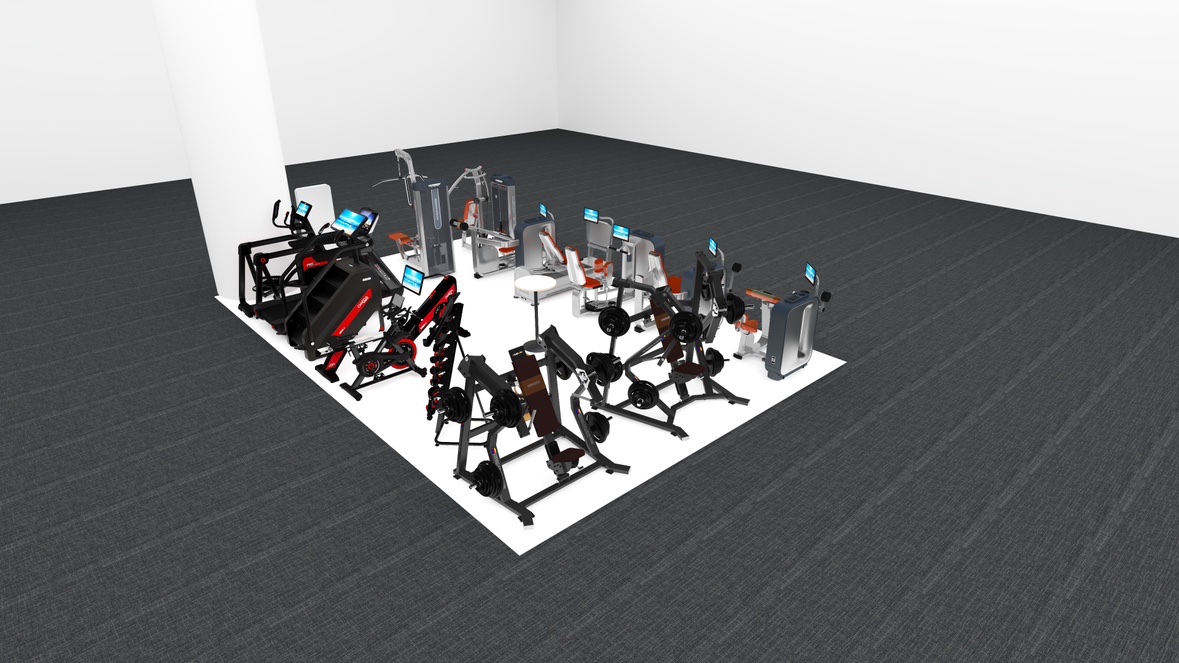
Successful commercial strength floors use a “selectorized first, plate-loaded second” strategy. Selectorized machines serve the general member population – safe, efficient, easy. Plate-loaded machines attract serious lifters – heavy weight, advanced movement patterns. HARISON delivers both under one roof – simplifying procurement and service.

Recommended Ratio

Industry experience suggests for a mid-sized commercial gym: 60% selectorized + 30% plate-loaded + 10% free weights.

  • Selectorized should cover core muscle groups – chest, back, shoulders, legs

  • Plate-loaded should prioritize heavy movements – leg press, chest press, row

Why Choose HARISON for Your Strength Floor

  • Full-line supplier – both selectorized and plate-loaded from one brand

  • Smart integration – G40 Track series with performance tracking and HARISON App

  • Flexible sourcing – no MOQ, mixed container shipping

  • Free layout consultation – professional design for your floor plan

Conclusion – Choose the Right Mix for Your Members 🎯

There’s no single “better” – the right choice depends on your members.

  • Commercial gyms with diverse members: Prioritize selectorized for the main floor

  • Performance training facilities: Emphasize plate-loaded for serious athletes

  • Most successful strength floors: Blend both – selectorized for volume, plate-loaded for intensity

HARISON delivers both selectorized and plate-loaded commercial strength solutions – all from one reliable manufacturer. Contact our commercial team for a customized strength floor layout and quote.

Shop HARISON Commercial Strength Equipment

Frequently Asked Questions (FAQ) ❓

Q1: Are plate-loaded machines better for building strength?

A: Plate-loaded machines typically allow for heavier loading, making them excellent for progressive overload. The movement paths also often mimic barbell patterns more closely, which many advanced lifters prefer for strength development.

Q2: Why are selectorized machines more expensive than plate-loaded?

A: Selectorized machines include a built-in weight stack, guide rods, shrouds, and more complex pulley/cam systems – all of which add to manufacturing costs. Plate-loaded machines have simpler mechanical structures.

Q3: Can I convert a plate-loaded machine to selectorized?

A: Some manufacturers offer conversion kits, but generally, this is not possible for most machines. The reverse (selectorized to plate-loaded) is also not feasible.

Q4: Which type is quieter to use in a gym?

A: Selectorized machines are generally quieter because the weight stack moves along guide rods within a shroud. Plate-loaded machines can produce more noise from plates clanging against each other, though some designs include rubberized plate horns to minimize this.

Q5: How many strength machines do I need for a 500 sqm gym?

A: A 500 sqm facility typically accommodates 15-25 strength machines. The exact number depends on layout density, whether you include free weight areas, and your target member capacity. A balanced mix should include both selectorized and plate-loaded machines. HARISON’s team can help you plan the optimal configuration.