
The Ultimate Guide to Choosing and Using a Barbell for Your Home Gym
Building a home gym is an exciting milestone for any fitness enthusiast, and at the center of nearly every serious strength training setup sits the barbell. Whether your goal is powerlifting, Olympic weightlifting, general strength building, or functional fitness, a quality barbell is the most versatile and enduring investment you can make. Unlike single-purpose machines, a barbell allows you to perform compound movements that recruit multiple muscle groups simultaneously, maximizing your training efficiency and functional strength.
However, with so many options available on the market, selecting the right barbell can feel overwhelming. From sleeve rotation and tensile strength to knurling patterns and coating types, understanding the technical specifications of a barbell ensures that you make a safe, durable, and performance-driven purchase. This guide explores everything you need to know about choosing, using, and maintaining a barbell for your home training space.
Understanding Barbell Anatomy and Specifications
Before evaluating specific types of barbells, it is crucial to understand the fundamental components and engineering metrics that define barbell performance. A standard Olympic barbell consists of a steel shaft, two rotating sleeves where weight plates are loaded, and collars or snap rings that secure the sleeves to the shaft.
Tensile Strength and Steel Quality
Tensile strength, measured in Pounds per Square Inch (PSI), is one of the most reliable indicators of barbell quality and durability. High-grade steel bars typically feature a tensile strength ranging from 190,000 to 200,000 PSI or higher. Bars in this range offer excellent memory, meaning they will spring back to their original straight position even after enduring heavy deadlifts or squats. Lower-quality bars with lower PSI ratings are prone to permanent bending under heavy loads, making them unsafe and unsuitable for serious strength training.
Whip and Rotation
Whip refers to the natural flexibility of the steel shaft. In Olympic weightlifting movements such as the clean and jerk or snatch, a barbell with moderate to high whip allows lifters to harness the bounce of the bar to transition under the weight more efficiently. Conversely, powerlifters generally prefer a stiffer bar with minimal whip to maintain stability during heavy squats, bench presses, and deadlifts. Sleeve rotation—governed by bushings or needle bearings—is another critical factor. Bushings offer a smoother, more controlled rotation suited for powerlifting, while needle bearings provide rapid, frictionless spin required for explosive Olympic lifts.
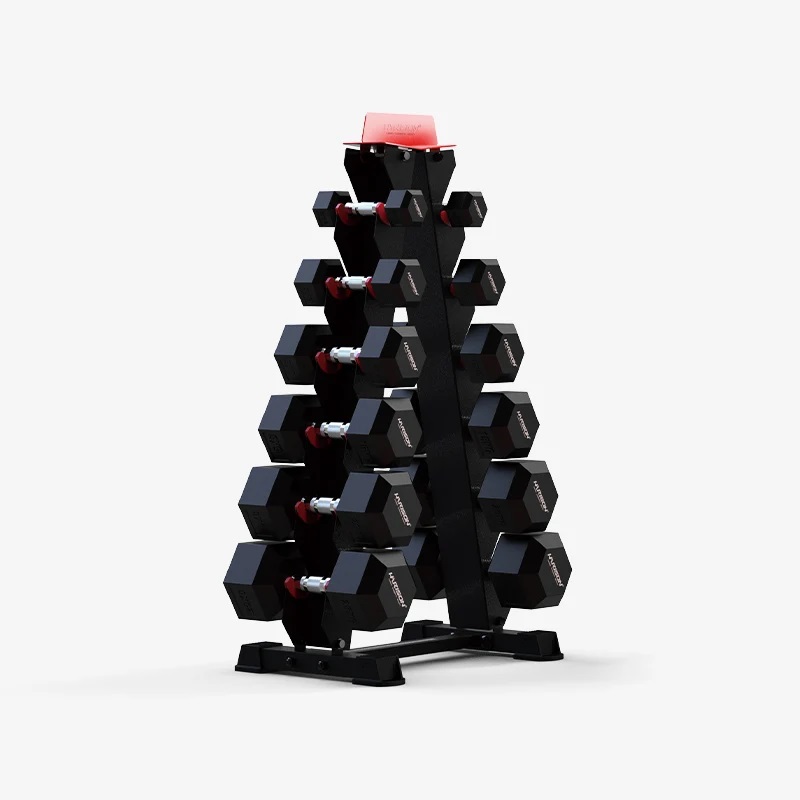
HARISON HR-325 Tower Dumbbell Frame
Key Types of Barbells for Different Training Goals
Not all barbells are created equal. Different training disciplines demand specialized bar designs to optimize performance and reduce injury risk. Choosing the correct bar type depends entirely on your primary training focus.
| Barbell Type | Typical Length | Shaft Diameter | Primary Use Case | Key Characteristic |
| **Men’s Olympic Bar** | 7 feet (220 cm) | 28 mm | Olympic lifting, CrossFit | High spin, moderate whip |
| **Women’s Olympic Bar** | 6.5 feet (201 cm) | 25 mm | Olympic lifting, general training | Thinner grip, high spin |
| **Powerlifting Bar** | 7 feet (220 cm) | 28.5–29 mm | Squat, bench, deadlift | Stiff shaft, aggressive knurling |
| **Multi-Purpose Bar** | 7 feet (220 cm) | 28.5 mm | General strength, garage gyms | Balanced whip, dual knurling |
Multi-Purpose and Garage Gym Barbells
For most home gym owners who enjoy a diverse routine combining powerlifting, bodybuilding, and general conditioning, a multi-purpose bar is the ideal choice. These bars feature dual knurling marks to accommodate both powerlifting and weightlifting grips, moderate whip, and a reliable bushing system that balances durability with smooth rotation. They provide the versatility needed to transition seamlessly from bench presses to bent-over rows without needing multiple specialized bars.
Specialized Bars: Trap Bars and EZ Curl Bars
Beyond standard straight bars, specialized bars can enhance your home gym setup. A trap bar (or hex bar) places your center of gravity inside the weight frame, reducing lower back strain during deadlifts and making it an exceptional tool for beginners and experienced lifters alike. An EZ curl bar features angled grips that reduce wrist and elbow stress during bicep curls and skull crushers, promoting joint health during arm isolation work.
Knurling and Finishes: Grip and Corrosion Resistance
The tactile interface between your hands and the steel is determined by the knurling—the textured pattern etched into the barbell shaft. Knurling ensures a secure grip when your palms get sweaty during intense sets.
Knurling Patterns and Center Knurling
Knurling aggressiveness varies widely. Powerlifting bars often feature sharp, deep knurling to lock into the hand during maximal deadlifts. Multi-purpose bars feature moderate knurling that provides a secure grip without tearing your skin during high-rep training. Additionally, many bars feature a center knurling, which helps the bar stick to your back during heavy squats. However, some lifters prefer center-knurling-free bars to avoid skin abrasion during chest-to-bar movements or front squats.
Protective Coatings
Because barbells are exposed to sweat, chalk, and humidity, steel maintenance is vital. Different finishes offer varying levels of defense against rust and wear:
- **Bare Steel:** Offers the purest, most natural grip feel, but requires regular oiling and maintenance to prevent oxidation.
- **Black Oxide:** Provides a sleek matte appearance and moderate grip retention, though it offers limited corrosion resistance compared to plated options.
- **Hard Chrome and Stainless Steel:** The gold standard for home gyms. Stainless steel provides unmatched grip and rust resistance without requiring heavy coatings, while hard chrome delivers a durable, highly corrosion-resistant shield.
Integrating a Barbell into Your Home Gym Space and Safety Routine
Setting up a barbell training station at home requires careful consideration of spatial dimensions, flooring, and safety equipment. A standard Olympic barbell is 7 feet long, which means you need at least an 8-foot to 10-foot clearance to safely load and unload plates without striking walls or surrounding equipment.
Flooring and Protection
Dropping heavy weights on bare concrete or standard household flooring can damage both your equipment and your foundation. Installing high-density rubber gym flooring or interlocking rubber horse stall mats absorbs impact, protects your barbell sleeves, and reduces noise. When performing deadlifts or Olympic lifts, pairing your rubber flooring with wooden lifting platforms provides a stable, professional-grade surface.
Safety Essentials: Racks, Spotter Arms, and Collars
Training safely at home means anticipating fatigue and equipment failure. A sturdy power rack or squat stand equipped with adjustable safety spotter arms is non-negotiable for bench presses and squats. Spotter arms catch the bar if you fail a rep, preventing injury. Additionally, always use reliable barbell collars to secure your weight plates and prevent plate shift during dynamic movements, ensuring balanced load distribution across the bar.
Maintenance Practices for Long-Term Durability
A high-quality barbell is an investment that, with proper care, can last a lifetime. Establishing a routine maintenance schedule prevents rust, maintains sleeve rotation, and ensures safe training sessions.
Cleaning and Oiling Routine
Sweat and magnesium carbonate chalk are corrosive agents that accelerate rust formation. After intense workouts, wipe down the barbell shaft and sleeves with a microfiber cloth to remove sweat and chalk residue. Every few months, apply a light coat of 3-in-1 oil or specialized gun oil to the knurling and rub it in, allowing it to sit before wiping away the excess. This creates a protective barrier against ambient humidity.
Maintaining Sleeve Rotation
If your barbell sleeves begin to feel sluggish or make grinding noises, the internal bushings or bearings may require cleaning and lubrication. For bushing bars, removing the end cap and snap ring allows you to clean out old debris, apply fresh lithium grease or machine oil, and reassemble the sleeve for buttery-smooth rotation. Regular upkeep prevents premature wear and keeps your lifts feeling crisp and responsive.
Conclusion and Next Steps for Your Home Gym
Investing in a reliable barbell transforms your home gym from a basic collection of weights into a versatile training sanctuary. By understanding core metrics such as tensile strength, whip, knurling texture, and steel finishes, you can select a bar that matches your lifting style and endures years of rigorous training. Pair your barbell with a sturdy rack, protective flooring, and a set of calibrated weight plates to unlock endless strength-building possibilities. Explore our curated selection of fitness equipment and home gym accessories to find the ideal barbell that supports your long-term fitness journey today.



Leave a Reply
Want to join the discussion?Feel free to contribute!